
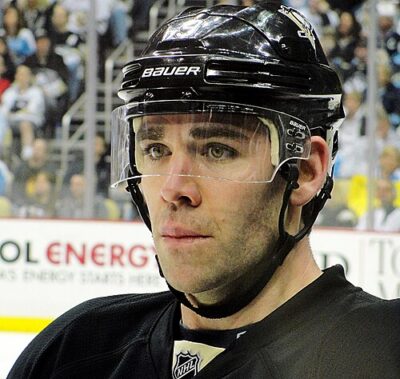
Pascal Dupuis is a Canadian ice hockey player. Born April 7, 1979, in Laval. Teams include Atlanta Thrashers, Minnesota Wild and New York Rangers. Awards include Stanley Cup.
Facts
12 facts · 1 confirmed by two sources · 2 cited · 9 from one source
Where this comes from
Papalocal keeps its own record. It started from these sources; what each one said is kept here as it was copied, so a change on their side never changes this page by itself. Tap one to read its version.
What Wikidata says · copied November 18, 2026 · revision 2529068336
- Described as
- Canadian ice hockey player
- Born
- April 7, 1979
- Born in
- Laval
- Citizen of
- Canada
- Occupation
- ice hockey player · 1 reference
- Teams
- Atlanta Thrashers; Minnesota Wild; New York Rangers; Pittsburgh Penguins; HC Ajoie
- Sport
- ice hockey · 1 reference
- Awards
- Stanley Cup
- Height
- 1.85 m (6 ft 1 in)
- Wikipedias with a page
- 14
Wikidata item Q569331 (wikidata.org/wiki/Q569331), public domain (CC0). Copied November 18, 2026.
What Wikipedia says · copied November 18, 2026 · revision 1383942668
Pascal Dupuis (born April 7, 1979) is a Canadian ice hockey coach and former professional ice hockey winger who is currently the director of player development for the New York Islanders of the National Hockey League (NHL). Undrafted out of the 1997 NHL entry draft, he played 15 seasons in the NHL for the Minnesota Wild, New York Rangers, Atlanta Thrashers, and the Pittsburgh Penguins.
Born and raised in Laval, Quebec, Dupuis played with the Laval Régents before being drafted by the Rouyn-Noranda Huskies in the Quebec Major Junior Hockey League. In his first season with the Huskies, he fractured his leg which prevented him from being selected in the NHL draft. Dupuis continued his major junior career with the Huskies and the Shawinigan Cataractes, where he broke out offensively. Recording career-highs in goals, assists, and points with the Cataractes, the Minnesota Wild signed him in 2000 after an impressive showing at the Wild training camp.
Dupuis started his professional career assigned to the Wild's International Hockey League affiliate, the Cleveland Lumberjacks. After playing a full season with the Lumberjacks, openings in the Wild's roster due to injuries led to Dupuis making his NHL debut on April 2, 2001. He continued to be a mainstay until 2007, when he was traded to the New York Rangers. Dupuis was quickly dealt again to the Atlanta Thrashers, where he helped the Thrashers make their first and only postseason appearance. The following year, the Thrashers traded him to the Pittsburgh Penguins along with Marián Hossa. Expected to be nothing more than a role player with the Penguins, he contributed heavily to the team, being a part of the 2009 Stanley Cup winning team. Although Dupuis was productive with the Penguins, he started suffering multiple health issues from the 2013–14 season onwards, finally retiring in December 2015 but contractually remaining on the Pittsburgh Penguins’ long-term injury reserve list until the end of the 2016–17 NHL season. He was still considered a part of the 2016 Stanley Cup winning team, being able to hoist the cup.
Post retirement, Dupuis joined the Penguins organization as a part-time scout out of Quebec and as a part of their player development system. He left the organization in 2018 to coach his son's school hockey team, the Lucille-Teasdale Diabolos, leading the team to the Quebec International Pee-Wee Hockey Tournament Scolaire Division finals. In 2020, he joined the Cataractes organization to become a franchise co-owner and the director of hockey operations; he later stepped down from the director of hockey operations and became an assistant coach with the Cataractes. He joined the New York Islanders organization in 2026 as the current director of player development.
- Born, in its opening lines
- April 7, 1979
From the Wikipedia article “Pascal Dupuis” (en.wikipedia.org/wiki/Pascal_Dupuis), by its contributors, under CC BY-SA 4.0 (creativecommons.org/licenses/by-sa/4.0/). Copied November 18, 2026; not changed.
Confirmed Two sources agree. Cited One source, and it names where it got it. One source One source, without a reference of its own. Sources disagree The sources disagree. We show the best-supported value and keep theirs below.
