
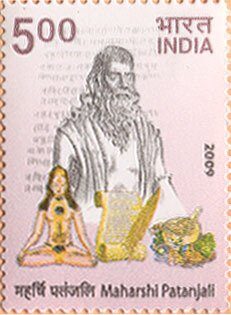
Patanjali
Patanjali was an ancient Indian scholar(s) of grammar and linguistics, of yoga, of medical treatises. Known for Yoga Sutras of Patanjali.
Facts
7 facts · 0 confirmed by two sources · 0 cited · 7 from one source
Where this comes from
Papalocal keeps its own record. It started from these sources; what each one said is kept here as it was copied, so a change on their side never changes this page by itself. Tap one to read its version.
What Wikidata says · copied November 16, 2026 · revision 2550433705
- Described as
- ancient Indian scholar(s) of grammar and linguistics, of yoga, of medical treatises
- Other names
- Patañjali
- Born in
- India · 1 reference
- Occupation
- linguist; mathematician; philosopher; writer · 1 reference
- Known for
- Yoga Sutras of Patanjali
- Religion
- Samkhya
- Wikipedias with a page
- 86
Wikidata item Q231680 (wikidata.org/wiki/Q231680), public domain (CC0). Copied November 16, 2026.
What Wikipedia says · copied November 16, 2026 · revision 1380552072
Patanjali (Sanskrit: पतञ्जलि, IAST: Patañjali, Sanskrit pronunciation: [pɐtɐɲdʑɐli]; also called Gonardiya or Gonikaputra) was the name of one or more author(s), mystic(s) and philosopher(s) in ancient India. His name is recorded as an author and compiler of a number of Sanskrit works. The greatest of these is the Yoga Sutras, a classical yoga text. Estimates based on analysis of this work suggests that its author(s) may have lived between the 2nd century BCE and the 5th century CE.
An author of the same name is credited with the authorship of the classic text on Sanskrit grammar named Mahābhāṣya, that is firmly datable to the 2nd century BCE, and authorship of medical texts possibly dating from 8th-10th centuries CE. The two works, Mahābhāṣya and Yoga Sutras, are completely different in subject matter, and Indologist Louis Renou has shown that there are significant differences in language, grammar and vocabulary. Before the time of Bhoja (11th century), no known text conflates the identity of the two authors.
There has been speculation as to whether the sage Patañjali is the author of all the works attributed to him, as there are a number of known historical authors of the same name. A great deal of scholarship has been devoted over the 20th century to the issue of the historicity or identity of this author or these authors. The view that these were likely different authors is now generally accepted by Western scholars, but "glorification" of Patanjali as singular author of the yoga, grammar, and medical texts "has become an oft-repeated article of faith" "in more traditional circles" and yoga culture.
Patanjali is regarded as an avatar of Adi Sesha.
From the Wikipedia article “Patanjali” (en.wikipedia.org/wiki/Patanjali), by its contributors, under CC BY-SA 4.0 (creativecommons.org/licenses/by-sa/4.0/). Copied November 16, 2026; not changed.
Confirmed Two sources agree. Cited One source, and it names where it got it. One source One source, without a reference of its own. Sources disagree The sources disagree. We show the best-supported value and keep theirs below.
