
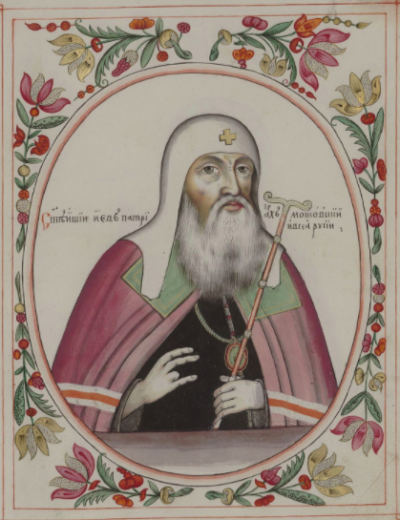
Patriarch Job of Moscow
Patriarch Job of Moscow was a first Patriarch of Moscow, from 1589 to 1605. Born 1525, in Staritsa. Died June 19, 1607, in Staritsa. Positions held include Metropolitan of Moscow and All Russia.
Facts
9 facts · 1 confirmed by two sources · 1 cited · 7 from one source
Where this comes from
Papalocal keeps its own record. It started from these sources; what each one said is kept here as it was copied, so a change on their side never changes this page by itself. Tap one to read its version.
What Wikidata says · copied November 18, 2026 · revision 2490253290
- Described as
- first Patriarch of Moscow, from 1589 to 1605
- Born
- 1525
- Died
- June 19, 1607
- Born in
- Staritsa
- Died in
- Staritsa · 1 reference
- Buried in
- Dormition Cathedral
- Citizen of
- Tsardom of Russia
- Occupation
- patriarch
- Positions held
- Metropolitan of Moscow and All Russia
- Religion
- Eastern Orthodoxy
- Wikipedias with a page
- 20
Wikidata item Q1652629 (wikidata.org/wiki/Q1652629), public domain (CC0). Copied November 18, 2026.
What Wikipedia says · copied November 18, 2026 · revision 1383772814
Job (Russian: И́ов, romanized: Iov; died 19 June 1607) was Metropolitan of Moscow and all Rus', the primate of the Russian Orthodox Church, from 1587 to 1589, and the first Patriarch of Moscow and all Rus' from 1589 to 1605.
He was the seventeenth metropolitan in Moscow to be appointed without the approval of the Ecumenical Patriarch of Constantinople as had been the norm. In 1589, Jeremias II, the patriarch of Constantinople, regularized Job's canonical status and raised him to the status of patriarch. 400 years later, the Russian Orthodox Church canonized him in 1989.
- Died, in its opening lines
- June 19, 1607
From the Wikipedia article “Patriarch Job of Moscow” (en.wikipedia.org/wiki/Patriarch_Job_of_Moscow), by its contributors, under CC BY-SA 4.0 (creativecommons.org/licenses/by-sa/4.0/). Copied November 18, 2026; not changed.
Confirmed Two sources agree. Cited One source, and it names where it got it. One source One source, without a reference of its own. Sources disagree The sources disagree. We show the best-supported value and keep theirs below.
