
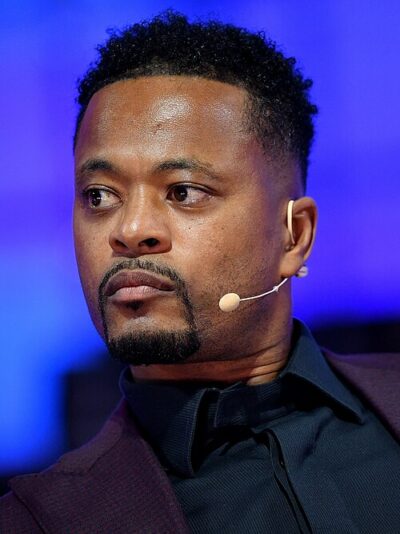
Patrice Evra
Patrice Evra is a French footballer. Born May 15, 1981, in Dakar. Teams include AS Monaco FC (2002–2006), OGC Nice (2000–2002) and AC Monza (1999–2000).
Facts
18 facts · 1 confirmed by two sources · 3 cited · 14 from one source
Where this comes from
Papalocal keeps its own record. It started from these sources; what each one said is kept here as it was copied, so a change on their side never changes this page by itself. Tap one to read its version.
What Wikidata says · copied November 16, 2026 · revision 2568842418
- Described as
- French footballer (born 1981)
- Other names
- Patrice Latyr Evra
- Born
- May 15, 1981 · 3 references
- Born in
- Dakar
- Name at birth
- Patrice Latyr Evra · 1 reference
- Citizen of
- France; Senegal · 1 reference
- Occupation
- association football player · 1 reference
- Teams
- AS Monaco FC (2002–2006); OGC Nice (2000–2002); AC Monza (1999–2000); Juventus FC (2014–2017); Marsala Football Club (1998–1999); France national under-21 association football team (2002–2003); France men's national association football team (2004–2016); Olympique de Marseille (2017); West Ham United F.C. (2018); Manchester United F.C. (2006–2014)
- Sport
- association football
- Height
- 1.73 m (5 ft 8 in) · 1 reference
- Wikipedias with a page
- 69
Wikidata item Q1916 (wikidata.org/wiki/Q1916), public domain (CC0). Copied November 16, 2026.
What Wikipedia says · copied November 16, 2026 · revision 1385254214
Patrice Latyr Evra (French pronunciation: [patʁis ɛvʁa]; born 15 May 1981) is a French former professional footballer who played as a left-back. Evra served as captain for both Manchester United and the France national team. He was named in the PFA Team of the Year on three occasions, as well as the FIFPro World XI and the UEFA Team of the Year. He is often regarded as one of the greatest full-backs of all time.
The son of a diplomat, Evra was born in Senegal and arrived in Europe when he was a year old. Evra started his senior career with Italian club Marsala. The following season, he joined Monza, but returned to France a year later to play for Nice where he was converted into a full-back. In 2002, he joined Monaco and was part of the team that reached the 2004 UEFA Champions League Final. Evra's performances for Monaco culminated in a move to English club Manchester United in January 2006, where he spent eight years and went on to win 14 trophies including five Premier League titles and a UEFA Champions League. In 2014 he joined Italian side Juventus, where he won two Serie A titles and played in another Champions League final. Evra moved to Marseille in January 2017; however, he was released in November 2017 after being banned from UEFA competition for seven months for kicking a fan prior to a UEFA Europa League match. Following a short-term contract with West Ham United in February 2018, Evra retired from professional football in July 2019, later completing his professional coaching badges and returning to former club Manchester United as a trainee coach at the club's academy.
Evra participated in five major international tournaments for France: the 2008, 2012 and 2016 UEFA European Championships, and both the 2010 and 2014 editions of the FIFA World Cup. Ahead of the 2010 World Cup, Evra was named captain of the national team by manager Raymond Domenech. At the tournament, he appeared in two group matches, although France had a poor campaign that saw the players go on strike after a first-round elimination. The incident resulted in Evra, for his role as captain, being suspended from national team duty for five matches. He returned to the squad and enjoyed a successful 2014 World Cup in Brazil under Didier Deschamps as France reached the quarter-finals.
- Born, in its opening lines
- May 15, 1981
From the Wikipedia article “Patrice Evra” (en.wikipedia.org/wiki/Patrice_Evra), by its contributors, under CC BY-SA 4.0 (creativecommons.org/licenses/by-sa/4.0/). Copied November 16, 2026; not changed.
Confirmed Two sources agree. Cited One source, and it names where it got it. One source One source, without a reference of its own. Sources disagree The sources disagree. We show the best-supported value and keep theirs below.
