
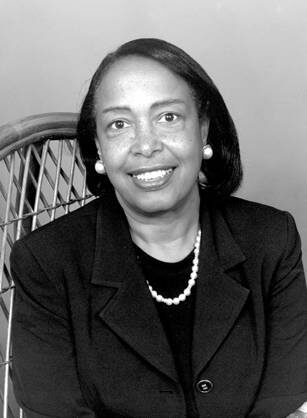
Patricia Bath
Patricia Bath was an American ophthalmologist and inventor. Born November 4, 1942, in Harlem. Died May 30, 2019, in San Francisco. Educated at Howard University and Hunter College. Awards include Fellow of the Optical Society and National Inventors Hall of Fame.
Facts
21 facts · 2 confirmed by two sources · 10 cited · 9 from one source
Where this comes from
Papalocal keeps its own record. It started from these sources; what each one said is kept here as it was copied, so a change on their side never changes this page by itself. Tap one to read its version.
What Wikidata says · copied November 15, 2026 · revision 2553327014
- Described as
- American ophthalmologist and inventor (1942-2019)
- Other names
- Patricia Era Bath
- Born
- November 4, 1942 · 2 references
- Died
- May 30, 2019 · 2 references
- Born in
- Harlem · 1 reference
- Died in
- San Francisco · 2 references
- Name at birth
- Patricia Bath · 1 reference
- Citizen of
- United States · 1 reference
- Occupation
- ophthalmologist · 1 reference; physician; inventor · 1 reference; researcher · 1 reference
- Worked for
- University of California, Los Angeles · 1 reference; Howard University Hospital · 1 reference
- Education
- Howard University (–1968) · 1 reference; Hunter College (–1964) · 1 reference; Bayard Rustin Educational Complex
- Member of
- Alpha Kappa Alpha · 1 reference
- Awards
- Fellow of the Optical Society; National Inventors Hall of Fame (2022)
- Field
- ophthalmology · 1 reference
- Children
- Jene · 1 reference
- Website
- http://laserphaco.net/content/index.html
- Wikipedias with a page
- 31
Wikidata item Q7145460 (wikidata.org/wiki/Q7145460), public domain (CC0). Copied November 15, 2026.
What Wikipedia says · copied November 15, 2026 · revision 1382869714
Patricia Era Bath (November 4, 1942 – May 30, 2019) was an African American ophthalmologist and humanitarian, known for championing a community-focused approach to eye care and for innovations in cataract surgery. She became the first woman to lead a postgraduate training program in ophthalmology, and the first woman elected to the honorary staff of the UCLA Medical Center. Bath was the first African-American to serve as a resident in ophthalmology at New York University. She was also the first African-American woman to serve on staff as a surgeon at the UCLA Medical Center.
Born in New York City, Bath received a National Science Foundation scholarship as a high school student to study the metabolic behavior of cancer. She graduated from Hunter College in 1964 with a degree in chemistry, and enrolled in Howard University College of Medicine in Washington, DC. She organized a contingent of students to provide services to the Poor People's Campaign in 1968. After graduation, she returned to New York to intern at Harlem Hospital Center, where she began research on eye diseases. She was an ophthalmology resident at New York University from 1970 to 1973, and then a fellow at Columbia University for one year. In 1974 she joined the faculty of the Jules Stein Eye Institute, making her the first female ophthalmology professor at the David Geffen School of Medicine at the University of California, Los Angeles.
Bath's research showed that blindness, especially caused by glaucoma, was more prevalent among Black Americans than the general population. In 1976, she co-founded the nonprofit American Institute for the Prevention of Blindness in Washington, D.C., to advance a program of "community ophthalmology" that would expand the availability of treatment for, education about, and prevention of eye diseases to medically underserved populations.
In the 1980s, Bath's development of the laserphaco probe led to safer and more precise cataract surgery. With the device, she became the first African-American woman doctor to receive a patent for a medical purpose.
- Born, in its opening lines
- November 4, 1942
- Died, in its opening lines
- May 30, 2019
From the Wikipedia article “Patricia Bath” (en.wikipedia.org/wiki/Patricia_Bath), by its contributors, under CC BY-SA 4.0 (creativecommons.org/licenses/by-sa/4.0/). Copied November 15, 2026; not changed.
Confirmed Two sources agree. Cited One source, and it names where it got it. One source One source, without a reference of its own. Sources disagree The sources disagree. We show the best-supported value and keep theirs below.
