
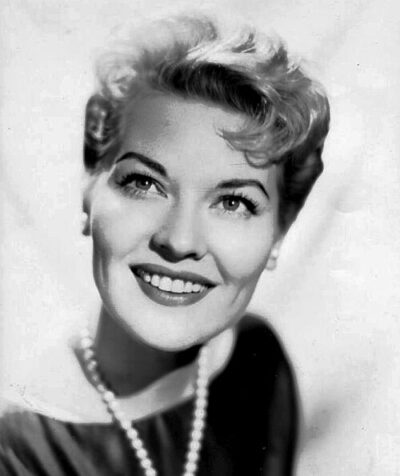
Patti Page
Patti Page was an American country-pop singer. Born November 8, 1927, in Claremore. Died January 1, 2013, in Encinitas. Educated at Webster High School. Awards include Grammy Lifetime Achievement Award, star on Hollywood Walk of Fame and Oklahoma Music Hall of Fame.
Facts
27 facts · 2 confirmed by two sources · 2 cited · 23 from one source
Where this comes from
Papalocal keeps its own record. It started from these sources; what each one said is kept here as it was copied, so a change on their side never changes this page by itself. Tap one to read its version.
What Wikidata says · copied November 13, 2026 · revision 2545656373
- Described as
- American country-pop singer (1927–2013)
- Other names
- Clara Ann Fowler
- Born
- November 8, 1927 · 6 references
- Died
- January 1, 2013 · 7 references
- Born in
- Claremore
- Died in
- Encinitas
- Buried in
- California
- Cause of death
- disease
- Name at birth
- Clara Ann Fowler
- Citizen of
- United States
- Occupation
- singer; singer-songwriter; recording artist; musician · 1 reference
- Education
- Webster High School
- Genre
- traditional pop; country music; folk music
- Instrument
- voice
- Record label
- Mercury Records; Columbia Records; Epic Records; Philips Records
- Awards
- Grammy Lifetime Achievement Award (2013); star on Hollywood Walk of Fame · 1 reference; Oklahoma Music Hall of Fame (1997) · 1 reference
- Field
- music composing; performing arts
- Website
- https://www.last.fm/music/Patti+Page/
- Wikipedias with a page
- 53
Wikidata item Q175759 (wikidata.org/wiki/Q175759), public domain (CC0). Copied November 13, 2026.
What Wikipedia says · copied November 13, 2026 · revision 1371792456
Clara Ann Fowler (November 8, 1927 – January 1, 2013), better known by her stage name Patti Page, was an American singer. Primarily known for pop and country music, she was the top-charting female vocalist and best-selling female artist of the 1950s, selling over 100 million records during a six-decade-long career. She was often introduced as "the Singin' Rage, Miss Patti Page". New York WNEW disc-jockey William B. Williams introduced her as "A Page in my life called Patti".
Page signed with Mercury Records in 1947, and became their first successful female artist, starting with 1948's "Confess". In 1950, she had her first million-selling single "With My Eyes Wide Open, I'm Dreaming", and eventually had 14 additional million-selling singles between 1950 and 1965.
Page's signature song, "Tennessee Waltz", is the best selling song of the 1950s by a female artist, one of the biggest-selling singles of the 20th century, and is recognized today as one of the official songs of the state of Tennessee. It spent 13 weeks atop the Billboard's best-sellers list in 1950/51. Page had three additional number-one hit singles between 1950 and 1953, "All My Love (Bolero)", "I Went to Your Wedding", and "(How Much Is) That Doggie in the Window?".
Unlike most other pop singers, Page blended country music styles into many of her songs. As a result of this crossover appeal, many of Page's singles appeared on the Billboard Country Chart. In the 1970s, she shifted her style more toward country music and began having even more success on the country charts, ending up as one of the few vocalists to have charted in five separate decades.
With the rise of rock and roll in the 1950s, mainstream popular music record sales began to decline. Page was among the few pop singers who were able to maintain popularity, continuing to have hits well into the 1960s, with "Old Cape Cod", "Allegheny Moon", "A Poor Man's Roses (or a Rich Man's Gold)", and "Hush, Hush, Sweet Charlotte".
In 1997, Patti Page was inducted into the Oklahoma Music Hall of Fame. She was posthumously honored with the Lifetime Achievement Grammy Award in 2013.
- Born, in its opening lines
- November 8, 1927
- Died, in its opening lines
- January 1, 2013
From the Wikipedia article “Patti Page” (en.wikipedia.org/wiki/Patti_Page), by its contributors, under CC BY-SA 4.0 (creativecommons.org/licenses/by-sa/4.0/). Copied November 13, 2026; not changed.
Confirmed Two sources agree. Cited One source, and it names where it got it. One source One source, without a reference of its own. Sources disagree The sources disagree. We show the best-supported value and keep theirs below.
