
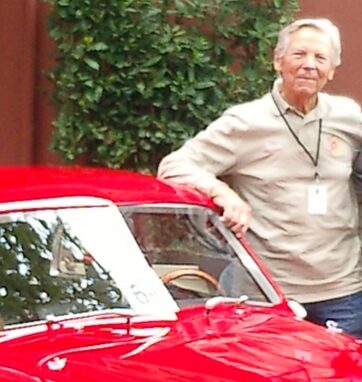
Paul Frère
Paul Frère was a Belgian racecar driver and journalist. Born January 30, 1917, in Le Havre. Died February 23, 2008, in Nice.
Facts
13 facts · 2 confirmed by two sources · 5 cited · 6 from one source
Where this comes from
Papalocal keeps its own record. It started from these sources; what each one said is kept here as it was copied, so a change on their side never changes this page by itself. Tap one to read its version.
What Wikidata says · copied November 17, 2026 · revision 2555742953
- Described as
- Belgian racecar driver and journalist
- Other names
- Paul Frere
- Born
- January 30, 1917 · 5 references
- Died
- February 23, 2008 · 6 references
- Born in
- Le Havre · 2 references
- Died in
- Nice · 1 reference
- Citizen of
- Belgium; France · 2 references
- Occupation
- Formula One driver; rower; journalist · 1 reference; racing automobile driver · 1 reference; writer
- Sport
- rowing
- Father
- Maurice Frère
- Wikipedias with a page
- 25
Wikidata item Q173328 (wikidata.org/wiki/Q173328), public domain (CC0). Copied November 17, 2026.
What Wikipedia says · copied November 17, 2026 · revision 1385782865
Paul Frère (French pronunciation: [pɔl fʁɛʁ]; 30 January 1917 – 23 February 2008) was a racing driver and journalist from Belgium. He participated in eleven World Championship Formula One Grands Prix debuting on 22 June 1952 and achieving one podium finish with a total of eleven championship points. He drove in several non-Championship Formula One races, winning the 1952 Grand Prix des Frontières and 1960 VI South African Grand Prix.
Frère also won the 1960 24 Hours of Le Mans, driving for Ferrari with fellow Belgian teammate Olivier Gendebien.
- Born, in its opening lines
- January 30, 1917
- Died, in its opening lines
- February 23, 2008
From the Wikipedia article “Paul Frère” (en.wikipedia.org/wiki/Paul_Frère), by its contributors, under CC BY-SA 4.0 (creativecommons.org/licenses/by-sa/4.0/). Copied November 17, 2026; not changed.
Confirmed Two sources agree. Cited One source, and it names where it got it. One source One source, without a reference of its own. Sources disagree The sources disagree. We show the best-supported value and keep theirs below.
