
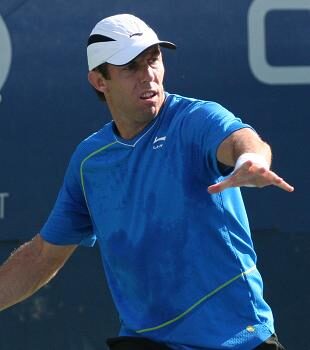
Paul Hanley is an Australian tennis player. Born November 12, 1977, in Melbourne.
Facts
7 facts · 1 confirmed by two sources · 5 cited · 1 from one source
Where this comes from
Papalocal keeps its own record. It started from these sources; what each one said is kept here as it was copied, so a change on their side never changes this page by itself. Tap one to read its version.
What Wikidata says · copied November 17, 2026 · revision 2516270288
- Described as
- Australian tennis player
- Other names
- Paul Jason Hanley
- Born
- November 12, 1977 · 1 reference
- Born in
- Melbourne · 1 reference
- Citizen of
- Australia · 1 reference
- Occupation
- tennis player (1997–2014) · 1 reference
- Sport
- tennis · 1 reference
- Lived in
- Sutton · 1 reference
- Height
- 1.83 m (6 ft 0 in)
- Wikipedias with a page
- 27
Wikidata item Q335326 (wikidata.org/wiki/Q335326), public domain (CC0). Copied November 17, 2026.
What Wikipedia says · copied November 17, 2026 · revision 1369277580
Paul Jason Hanley (born 12 November 1977) is a retired professional male tennis player from Australia, specialising in doubles and owning 26 ATP titles in this discipline.
He made the 2005 Wimbledon and 2011 Australian Open finals in mixed doubles, playing with Tatiana Perebiynis and Chan Yung-jan respectively, falling short on both occasions. His best results came alongside Wayne Arthurs and Kevin Ullyett, with whom Hanley formed long-term doubles partnerships. Hanley has an 8–4 win–loss record on the Australian Davis Cup Team. The Australian's highest doubles ranking was World Number 5. His parents, Jay and Judy, co-own a tennis centre, which is one of the main reasons why Hanley pursued a career in the sport.
- Born, in its opening lines
- November 12, 1977
From the Wikipedia article “Paul Hanley (tennis)” (en.wikipedia.org/wiki/Paul_Hanley_(tennis)), by its contributors, under CC BY-SA 4.0 (creativecommons.org/licenses/by-sa/4.0/). Copied November 17, 2026; not changed.
Confirmed Two sources agree. Cited One source, and it names where it got it. One source One source, without a reference of its own. Sources disagree The sources disagree. We show the best-supported value and keep theirs below.
