
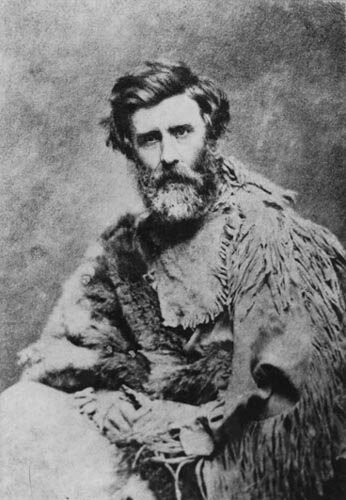
Paul Kane
Paul Kane was an Irish-Canadian painter. Born September 3, 1810, in Mallow. Died February 20, 1871, in Toronto. Known for Flathead woman with child. Awards include Person of National Historic Significance.
Facts
14 facts · 0 confirmed by two sources · 9 cited · 5 from one source
Where this comes from
Papalocal keeps its own record. It started from these sources; what each one said is kept here as it was copied, so a change on their side never changes this page by itself. Tap one to read its version.
What Wikidata says · copied November 15, 2026 · revision 2556972308
- Described as
- Irish-Canadian painter (1810-1871)
- Other names
- Paul Keane
- Born
- September 3, 1810 · 9 references
- Died
- February 20, 1871 · 7 references
- Born in
- Mallow · 1 reference
- Died in
- Toronto · 1 reference
- Citizen of
- Canada
- Occupation
- painter · 3 references; writer; explorer; architectural drafter · 1 reference
- Genre
- portrait · 1 reference; landscape painting · 1 reference
- Known for
- Flathead woman with child
- Awards
- Person of National Historic Significance · 1 reference
- Field
- painting
- Wikipedias with a page
- 25
Wikidata item Q506000 (wikidata.org/wiki/Q506000), public domain (CC0). Copied November 15, 2026.
What Wikipedia says · copied November 15, 2026 · revision 1385888983
| birth_name =
| birth_date = September 3, 1810
| birth_place = Mallow, County Cork, Ireland
| death_date = February 20, 1871(1871-02-20) (aged 60)
| death_place = Toronto, Ontario, Canada
| spouse = Harriet Clench (m. 1853)
| field = Painter
| training = Self-educated
| movement =
| works =
| patrons =
| awards =
}}
Paul Kane (September 3, 1810 – February 20, 1871) was an Irish-born Canadian artist whose paintings and especially field sketches are known as the earliest comprehensive set of visual documents of Indigenous life in what are now western Ontario, Manitoba, Saskatchewan, Alberta, British Columbia, Wisconsin, Washington, and Oregon. Kane grew up in York, Upper Canada (now Toronto), and trained himself to sketch bust portraits of people while working in various towns in the United States during the late 1830s and by copying European masters during a "Grand Tour" study trip through Italy, France, and England 1841–1843. His travels west of Toronto, which comprised two trips, from mid-June to December 1845, and from early May to mid-October 1848, permitted him to put that learning and skill to use recording the leaders and scenes of the lifeways of Indigenous North America. While his artistry was paramount, Kane also kept portrait and landscape logs as well as field notes. Upon his return to Toronto, he began painting oils on canvas with Indigenous subjects, based, sometimes very loosely and occasionally not at all, on these sketches. The paintings he completed in his Toronto studio are considered a part of Canadian heritage despite their routine ethnographic unreliability. The tastes of the age and attitudes towards Indigenous peoples render it unsurprising to find that, following the tenets of salvage ethnography, he worked up sketch portraits of people who sat for him into stock depictions of "noble savages." Something analogous occurred in a book published over his name in London in 1859. Repeatedly if not exclusively, Wanderings of an Artist among the Indians of North America portrays in a negative and pejorative light the people he met while travelling (and did not denigrate in his field writings). It is now thought that Kane, a phonetic speller and indifferent writer, deferred to others to help bring his narrative to publication.
From the Wikipedia article “Paul Kane” (en.wikipedia.org/wiki/Paul_Kane), by its contributors, under CC BY-SA 4.0 (creativecommons.org/licenses/by-sa/4.0/). Copied November 15, 2026; not changed.
Confirmed Two sources agree. Cited One source, and it names where it got it. One source One source, without a reference of its own. Sources disagree The sources disagree. We show the best-supported value and keep theirs below.
