
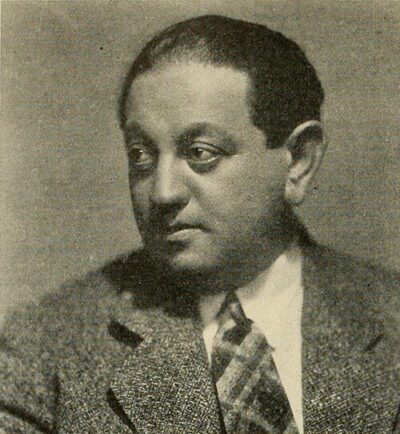
Paul Leni
Paul Leni was a German film director. Born July 8, 1885, in Stuttgart. Died September 2, 1929, in Hollywood.
Facts
16 facts · 2 confirmed by two sources · 11 cited · 3 from one source
Where this comes from
Papalocal keeps its own record. It started from these sources; what each one said is kept here as it was copied, so a change on their side never changes this page by itself. Tap one to read its version.
What Wikidata says · copied November 18, 2026 · revision 2568868487
- Described as
- German film director (1885–1929)
- Born
- July 8, 1885 · 6 references
- Died
- September 2, 1929 · 5 references
- Born in
- Stuttgart · 2 references
- Died in
- Hollywood · 1 reference
- Cause of death
- sepsis
- Name at birth
- Paul Josef Levi · 1 reference
- Citizen of
- German Reich
- Occupation
- film director · 2 references; production designer · 2 references; designer · 1 reference; director · 3 references; screenwriter · 1 reference; visual artist · 1 reference; filmmaker · 2 references; graphic artist · 2 references
- Spouse
- Lore Sello · 1 reference
- Wikipedias with a page
- 23
Wikidata item Q77465 (wikidata.org/wiki/Q77465), public domain (CC0). Copied November 18, 2026.
What Wikipedia says · copied November 18, 2026 · revision 1376174519
Paul Leni (born Paul Josef Levi, 8 July 1885 – 2 September 1929) was a German filmmaker and a key figure in German Expressionism, making Hintertreppe (1921) and Waxworks (1924) in Germany, and The Cat and the Canary (1927), The Chinese Parrot (1927), The Man Who Laughs (1928), and The Last Warning (1928) in the United States.
- Born, in its opening lines
- July 8, 1885
- Died, in its opening lines
- September 2, 1929
From the Wikipedia article “Paul Leni” (en.wikipedia.org/wiki/Paul_Leni), by its contributors, under CC BY-SA 4.0 (creativecommons.org/licenses/by-sa/4.0/). Copied November 18, 2026; not changed.
Confirmed Two sources agree. Cited One source, and it names where it got it. One source One source, without a reference of its own. Sources disagree The sources disagree. We show the best-supported value and keep theirs below.
