
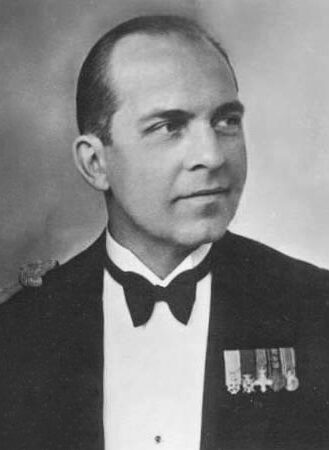
Paul of Greece
Paul of Greece was a King of Greece from 1947 to 1964. Born December 14, 1901, in Tatoi Palace. Died March 6, 1964, in Tatoi Palace. Positions held include King of the Hellenes (1947–1964). Awards include Knight Grand Cross with Collar of the Order of Merit of the Italian Republic, Knight of the Order of the Golden Fleece and Grand Cross of the Legion of Honour.
Facts
35 facts · 2 confirmed by two sources · 5 cited · 28 from one source
Where this comes from
Papalocal keeps its own record. It started from these sources; what each one said is kept here as it was copied, so a change on their side never changes this page by itself. Tap one to read its version.
What Wikidata says · copied November 16, 2026 · revision 2558206057
- Described as
- King of Greece from 1947 to 1964
- Other names
- King Paul I of Greece, King Pavlos I of Greece, Paul I of Greece, King Paul of Greece, Pavlos I of Greece
- Born
- December 14, 1901 · 6 references
- Died
- March 6, 1964 · 8 references
- Born in
- Tatoi Palace · 1 reference
- Died in
- Tatoi Palace · 1 reference
- Buried in
- Tatoi Royal Cemetery
- Cause of death
- stomach cancer
- Citizen of
- Greece
- Occupation
- monarch
- Positions held
- King of the Hellenes (1947–1964)
- Awards
- Knight Grand Cross with Collar of the Order of Merit of the Italian Republic (1952); Knight of the Order of the Golden Fleece; Grand Cross of the Legion of Honour; Grand Cross Special Class of the Order of Merit of the Federal Republic of Germany (1954); Grand Star of the Decoration for Services to the Republic of Austria; Order of the Redeemer · 1 reference; Knight Grand Commander of the Order of the Dannebrog; Bavarian Order of Merit; Grand Cross of the Order of Isabella the Catholic (1958) · 1 reference; Grand Cross of Naval Merit with white badge (1892) · 1 reference; Knight Grand Cross with Collar of the Order of Saint Olav (1958) · 1 reference; Collar of the Order of Isabella the Catholic (1958) · 1 reference; Knight of the Order of the Elephant (1927)
- Spouse
- Frederica of Hanover (1938–1964) · 1 reference
- Children
- Queen Sofía of Spain · 1 reference; Constantine II of Greece · 1 reference; Princess Irene of Greece and Denmark · 1 reference
- Father
- Constantine I of Greece
- Mother
- Sophia of Prussia
- Siblings
- George II of Greece; Alexander of Greece; Helen of Greece and Denmark; Princess Irene, Duchess of Aosta; Princess Katherine of Greece and Denmark
- Religion
- Church of Greece
- Military rank
- field marshal
- Wikipedias with a page
- 56
Wikidata item Q155394 (wikidata.org/wiki/Q155394), public domain (CC0). Copied November 16, 2026.
What Wikipedia says · copied November 16, 2026 · revision 1380024443
Paul (Greek: Παύλος, romanized: Pavlos; 14 December 1901 – 6 March 1964) was King of Greece from 1 April 1947 until his death on 6 March 1964.
Paul was born at Tatoi Palace as the third son of Crown Prince Constantine and Crown Princess Sophia of Greece. In 1912, the year before his father ascended the throne, Paul joined the Royal Hellenic Navy at eleven years old, becoming the youngest cadet at the time. After the National Schism during World War I, Constantine's abdication was forced and Paul and his family went into exile in Switzerland. Paul's brother, Alexander, became the Greek sovereign in 1917 when Constantine and Paul were exiled, however, Alexander's death in 1920 led to Constantine's restoration. In 1922, Paul's other brother, George, became the monarch. However, a referendum in 1924 two years later saw the abolition of the Greek monarchy. Paul moved to Italy with his family and then to London.
In London, Paul had an affair with his first cousin and his first love, Princess Nina Georgievna of Russia, who would eventually reject his marriage proposal. The monarchy and George's position as king were restored after another referendum in 1935. George was childless, which made Paul the heir presumptive and gave him the responsibility of finding a spouse and having children. At the 1936 Summer Olympics in Berlin, Paul successfully proposed to Frederica of Hanover, whom he had been seeing regularly for the past year. However, Paul's engagement to a German princess received a mixed reaction in Greece, especially since Adolf Hitler attempted to include Nazi swastika flags at their wedding ceremony. Paul was forced out of Greece with his family during World War II when Greece fell to the Axis Powers. Paul moved to Egypt and then South Africa, where he left his wife and three young children and moved to London with his brother for the remainder of the war.
After the conclusion of World War II, George returned via another referendum, while the Greek Civil War erupted. When George died in 1947, Paul succeeded his brother and became the King of Greece. Paul soon contracted typhoid fever, which restricted his ability to manage the Greek Civil War. The war nonetheless concluded in 1949 with monarchists defeating communist forces in the country. During his reign, Paul was also increasingly faced with deterioration in Greco-British relations and Greco-Turkish relations as he worked to achieve enosis. For his support of the movement, Paul was labelled a terrorist in the British media. Though Paul successfully secured money from the Marshall Plan to fund recovery and infrastructure projects, he was criticised for limiting democracy when the new 1952 Greek constitution gave extensive powers to the monarch. During his reign, Paul was commended by the media for his numerous state visits to multiple countries. He was later diagnosed with stomach cancer and died in 1964. He was succeeded by his only son, who became Constantine II. Paul had three children: Queen Sofía of Spain, Constantine II of Greece, and Princess Irene. Paul was also a first cousin of Prince Philip, Duke of Edinburgh.
- Born, in its opening lines
- December 14, 1901
- Died, in its opening lines
- March 6, 1964
From the Wikipedia article “Paul of Greece” (en.wikipedia.org/wiki/Paul_of_Greece), by its contributors, under CC BY-SA 4.0 (creativecommons.org/licenses/by-sa/4.0/). Copied November 16, 2026; not changed.
Confirmed Two sources agree. Cited One source, and it names where it got it. One source One source, without a reference of its own. Sources disagree The sources disagree. We show the best-supported value and keep theirs below.
