
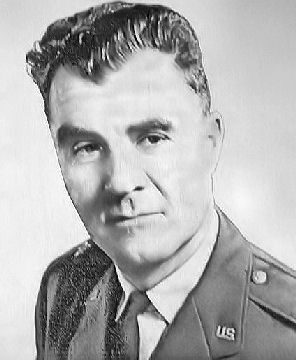
Paul Tibbets
Paul Tibbets was an United States Air Force pilot. Born February 23, 1915, in Quincy. Died November 1, 2007, in Columbus. Educated at University of Florida and University of Cincinnati. Awards include Distinguished Flying Cross, Legionnaire of Legion of Merit and Purple Heart.
Facts
26 facts · 2 confirmed by two sources · 4 cited · 20 from one source
Where this comes from
Papalocal keeps its own record. It started from these sources; what each one said is kept here as it was copied, so a change on their side never changes this page by itself. Tap one to read its version.
What Wikidata says · copied November 14, 2026 · revision 2553932408
- Described as
- United States Air Force pilot (1915–2007)
- Other names
- Paul Warfield Tibbets Jr.
- Born
- February 23, 1915 · 5 references
- Died
- November 1, 2007 · 6 references
- Born in
- Quincy · 2 references
- Died in
- Columbus · 3 references
- Cause of death
- heart failure
- Citizen of
- United States
- Occupation
- military officer; aircraft pilot · 2 references; military personnel · 3 references
- Education
- University of Florida; University of Cincinnati; Western Military Academy
- Awards
- Distinguished Flying Cross; Legionnaire of Legion of Merit; Purple Heart; Air Medal; National Aviation Hall of Fame (1996) · 1 reference; Distinguished Service Cross
- Military branch
- United States Air Force; United States Army Air Corps; United States Army Air Forces
- Military rank
- brigadier general; brigadier general
- Lived in
- Columbus; Quincy; Florida
- Wikipedias with a page
- 40
Wikidata item Q294555 (wikidata.org/wiki/Q294555), public domain (CC0). Copied November 14, 2026.
What Wikipedia says · copied November 14, 2026 · revision 1383812966
Paul Warfield Tibbets Jr. (23 February 1915 – 1 November 2007) was a brigadier general in the United States Air Force. He is best known as the aircraft captain who flew the B-29 Superfortress known as the Enola Gay (named after his mother) when it dropped a Little Boy, the first of two atomic bombs used in warfare, on the Japanese city of Hiroshima.
Tibbets enlisted in the United States Army in 1937 and qualified as a pilot in 1938. After the Japanese attack on Pearl Harbor, he flew anti-submarine patrols over the Atlantic. In February 1942, he became the commanding officer of the 340th Bombardment Squadron of the 97th Bombardment Group, which was equipped with the Boeing B-17. In July 1942, the 97th became the first heavy bombardment group to be deployed as part of the Eighth Air Force, and Tibbets became deputy group commander. He co-piloted the lead plane in the first American daylight heavy bomber mission against German-occupied Europe on 17 August 1942 that was piloted by Colonel Frank Alton Armstrong, Jr. (the 97th Bomb Group CO); and the first American raid of more than 100 bombers in Europe on 9 October 1942. Tibbets was chosen to fly Major General Mark W. Clark and Lieutenant General Dwight D. Eisenhower to Gibraltar. After flying 14 (possibly 25) combat missions, he became the assistant for bomber operations on the staff of the Twelfth Air Force.
Tibbets returned to the United States in February 1943 to help with the development of the Boeing B-29 Superfortress. In September 1944, he was appointed the commander of the 509th Composite Group, which would conduct the atomic bombings of Hiroshima and Nagasaki. After the war, he participated in the Operation Crossroads nuclear weapon tests at Bikini Atoll in mid-1946, and was involved in the development of the Boeing B-47 Stratojet in the early 1950s. He commanded the 308th Bombardment Wing and 6th Air Division in the late 1950s, and was military attaché in India from 1964 to 1966. After leaving the Air Force in 1966, he worked for Executive Jet Aviation, serving on the founding board and as its president from 1976 until his retirement in 1987.
After the war he received wide publicity, including motion picture portrayals, and became a symbolic figure in the debate over the Hiroshima and Nagasaki bombings.
- Born, in its opening lines
- February 23, 1915
- Died, in its opening lines
- November 1, 2007
From the Wikipedia article “Paul Tibbets” (en.wikipedia.org/wiki/Paul_Tibbets), by its contributors, under CC BY-SA 4.0 (creativecommons.org/licenses/by-sa/4.0/). Copied November 14, 2026; not changed.
Confirmed Two sources agree. Cited One source, and it names where it got it. One source One source, without a reference of its own. Sources disagree The sources disagree. We show the best-supported value and keep theirs below.
