
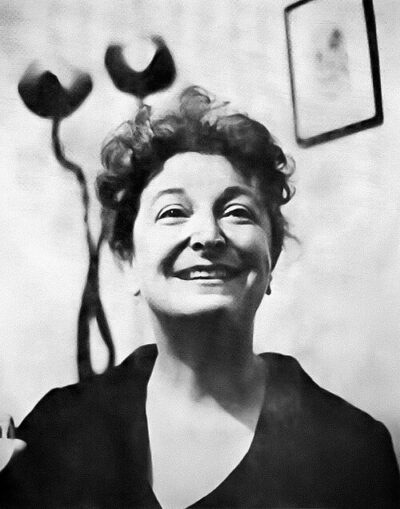
Pauline Kael
Pauline Kael was an American film critic. Born June 19, 1919, in Petaluma. Died September 3, 2001, in Great Barrington. Educated at University of California, Berkeley. Awards include Guggenheim Fellowship, National Book Award and George Polk Award.
Facts
15 facts · 2 confirmed by two sources · 10 cited · 3 from one source
Where this comes from
Papalocal keeps its own record. It started from these sources; what each one said is kept here as it was copied, so a change on their side never changes this page by itself. Tap one to read its version.
What Wikidata says · copied November 15, 2026 · revision 2567390120
- Described as
- American film critic (1919-2001)
- Born
- June 19, 1919 · 6 references
- Died
- September 3, 2001 · 5 references
- Born in
- Petaluma · 1 reference
- Died in
- Great Barrington · 1 reference
- Cause of death
- Parkinson's disease
- Citizen of
- United States
- Occupation
- film critic · 1 reference; writer · 1 reference; journalist · 1 reference
- Education
- University of California, Berkeley
- Awards
- Guggenheim Fellowship (1964) · 1 reference; National Book Award (1974) · 1 reference; George Polk Award (1970) · 1 reference; Crystal Award (1978) · 1 reference; Ivan Sandrof Lifetime Achievement Award (1999) · 1 reference
- Wikipedias with a page
- 38
Wikidata item Q436910 (wikidata.org/wiki/Q436910), public domain (CC0). Copied November 15, 2026.
What Wikipedia says · copied November 15, 2026 · revision 1385412892
Pauline Kael ( KAYL; June 19, 1919 – September 3, 2001) was an American film critic who wrote for The New Yorker from 1968 to 1991. Known for her "witty, biting, highly opinionated and sharply focused" reviews, Kael often defied the consensus of her contemporaries.
One of the most influential American film critics of her era, she left a lasting impression on the art form. Roger Ebert wrote in an obituary that Kael "had a more positive influence on the climate for film in America than any other single person over the last three decades". Kael, he said, "had no theory, no rules, no guidelines, no objective standards. You couldn't apply her 'approach' to a film. With her it was all personal." In a blurb for The Age of Movies, a collection of Kael's writings for the Library of America, Ebert wrote, "Like George Bernard Shaw, she wrote reviews that will be read for their style, humor and energy long after some of their subjects have been forgotten."
For American readers, she brought attention to international cinema, and championed New Hollywood directors. Sanford Schwartz writes that, in the 1960s, she "gave a breathing, textured life to the aims and sensibilities of Ingmar Bergman, Jean-Luc Godard, Federico Fellini, Satyajit Ray, Akira Kurosawa, François Truffaut, and Michelangelo Antonioni, among other European and Asian directors; and she endowed Robert Altman, Martin Scorsese, Paul Mazursky, Brian De Palma, and Francis Ford Coppola, among American directors of the following decade, with the same full-bodied presence. [...] Her deepest subject, in the end, isn't movies at all—it's how to live more intensely."
- Born, in its opening lines
- June 19, 1919
- Died, in its opening lines
- September 3, 2001
From the Wikipedia article “Pauline Kael” (en.wikipedia.org/wiki/Pauline_Kael), by its contributors, under CC BY-SA 4.0 (creativecommons.org/licenses/by-sa/4.0/). Copied November 15, 2026; not changed.
Confirmed Two sources agree. Cited One source, and it names where it got it. One source One source, without a reference of its own. Sources disagree The sources disagree. We show the best-supported value and keep theirs below.
