
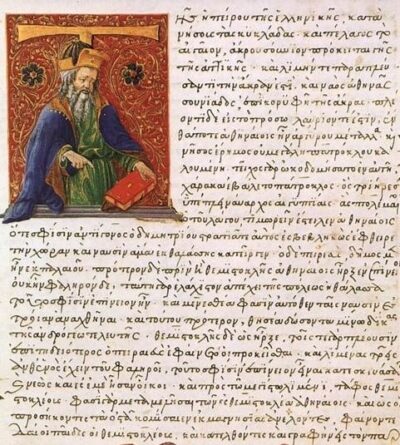
Pausanias
Pausanias was an ancient Greek geographer, travel writer and mythographer. Born 110, in Asia. Died 180, in Sicily. Known for Description of Greece.
Facts
8 facts · 0 confirmed by two sources · 3 cited · 4 from one source · 1 where the sources disagree
What’s different
- Born: we show 110 (Sources disagree). Wikidata also lists 115
Where this comes from
Papalocal keeps its own record. It started from these sources; what each one said is kept here as it was copied, so a change on their side never changes this page by itself. Tap one to read its version.
What Wikidata says · copied November 16, 2026 · revision 2567499382
- Described as
- ancient Greek geographer, travel writer and mythographer
- Other names
- Pausanias Periegetes
- Born
- 110; 115
- Died
- 180
- Born in
- Asia
- Died in
- Sicily · 1 reference
- Occupation
- writer · 2 references; geographer · 2 references; travel writer · 1 reference
- Known for
- Description of Greece
- Wikipedias with a page
- 66
Wikidata item Q192931 (wikidata.org/wiki/Q192931), public domain (CC0). Copied November 16, 2026.
What Wikipedia says · copied November 16, 2026 · revision 1344526948
Pausanias ( paw-SAY-nee-əs; Ancient Greek: Παυσανίας; c. 110 – c. 180) was a Greek traveler and geographer. He is famous for his Description of Greece (Ἑλλάδος Περιήγησις, Helládos Periḗgēsis), a lengthy work that describes ancient Greece from his firsthand observations. Description of Greece provides crucial information for making links between classical literature and modern archaeology, which is providing evidence of the sites and cultural details he mentions although knowledge of their existence may have become lost or relegated to myth or legend.
From the Wikipedia article “Pausanias (geographer)” (en.wikipedia.org/wiki/Pausanias_(geographer)), by its contributors, under CC BY-SA 4.0 (creativecommons.org/licenses/by-sa/4.0/). Copied November 16, 2026; not changed.
Confirmed Two sources agree. Cited One source, and it names where it got it. One source One source, without a reference of its own. Sources disagree The sources disagree. We show the best-supported value and keep theirs below.
