
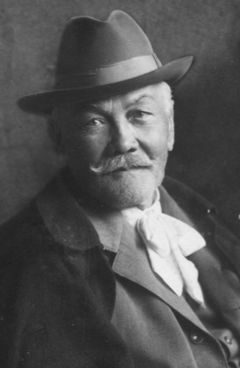
Pavol Országh Hviezdoslav
Pavol Országh Hviezdoslav was a Slovak poet, dramatist, and translator. Born February 2, 1849, in Vyšný Kubín. Died November 8, 1921, in Dolný Kubín. Positions held include member of the Revolutionary National Assembly of Czechoslovakia.
Facts
15 facts · 2 confirmed by two sources · 7 cited · 6 from one source
Where this comes from
Papalocal keeps its own record. It started from these sources; what each one said is kept here as it was copied, so a change on their side never changes this page by itself. Tap one to read its version.
What Wikidata says · copied November 17, 2026 · revision 2558733623
- Described as
- Slovak poet, dramatist, and translator (1849–1921)
- Other names
- Pavol Orszagh Hviezdoslav
- Born
- February 2, 1849 · 6 references
- Died
- November 8, 1921 · 6 references
- Born in
- Vyšný Kubín · 1 reference
- Died in
- Dolný Kubín · 1 reference
- Buried in
- Dolný Kubín
- Citizen of
- Czechoslovakia
- Occupation
- linguist; poet · 1 reference; writer · 2 references; translator · 1 reference; playwright · 1 reference; lawyer; politician · 1 reference; jurist · 1 reference
- Positions held
- member of the Revolutionary National Assembly of Czechoslovakia
- Wikipedias with a page
- 25
Wikidata item Q508663 (wikidata.org/wiki/Q508663), public domain (CC0). Copied November 17, 2026.
What Wikipedia says · copied November 17, 2026 · revision 1385686869
Pavol Országh Hviezdoslav (2 February 1849 – 8 November 1921) was a Slovak poet, dramatist, translator, and for a short time, member of the Czechoslovak parliament from 1918 to 1920. Originally, he wrote in a traditional style, but later became influenced by parnassism and modernism.
- Born, in its opening lines
- February 2, 1849
- Died, in its opening lines
- November 8, 1921
From the Wikipedia article “Pavol Országh Hviezdoslav” (en.wikipedia.org/wiki/Pavol_Országh_Hviezdoslav), by its contributors, under CC BY-SA 4.0 (creativecommons.org/licenses/by-sa/4.0/). Copied November 17, 2026; not changed.
Confirmed Two sources agree. Cited One source, and it names where it got it. One source One source, without a reference of its own. Sources disagree The sources disagree. We show the best-supported value and keep theirs below.
