
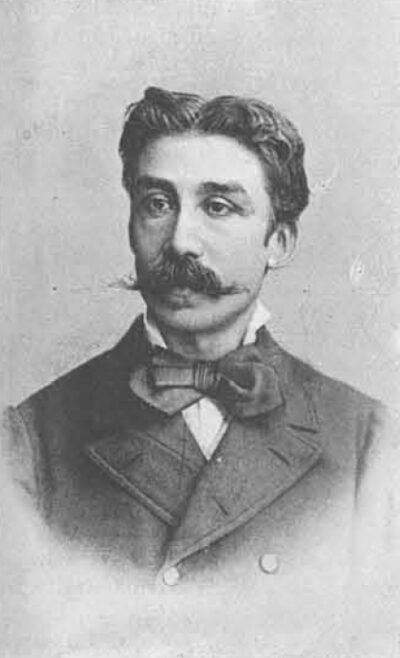
Pedro Américo
Pedro Américo was a Brazilian painter. Born April 29, 1843, in Areia. Died October 7, 1905, in Florence. Positions held include federal deputy of Paraíba (1890–1893). Known for Independence or Death, The Battle of Avaí and Tiradentes Quartered. Educated at Beaux-Arts de Paris. Awards include Knight in the Order of the Holy Sepulchre.
Facts
19 facts · 2 confirmed by two sources · 4 cited · 13 from one source
Where this comes from
Papalocal keeps its own record. It started from these sources; what each one said is kept here as it was copied, so a change on their side never changes this page by itself. Tap one to read its version.
What Wikidata says · copied November 16, 2026 · revision 2549657251
- Described as
- Brazilian painter (1843-1905)
- Other names
- Pedro Américo de Figueiredo de Melo, Pedro Américo De Figueiredo e Melo, Pedro Américo de Melo, Pedro Américo de Figueiredo e Melo, Pedro Américo de Figueiredo e Mello, Pedro Americo, Pedro Americo de Figueiredo de Melo, Pedro Americo De Figueiredo e Melo, Pedro Americo de Melo, Pedro Americo de Figueiredo e Mello, Pedro Americo de Figueiredo
- Born
- April 29, 1843 · 2 references
- Died
- October 7, 1905 · 2 references
- Born in
- Areia
- Died in
- Florence
- Buried in
- Rio de Janeiro
- Citizen of
- Brazil
- Occupation
- painter · 2 references; poet; novelist; politician · 1 reference; naturalist · 1 reference; writer · 1 reference
- Positions held
- federal deputy of Paraíba (1890–1893) · 1 reference
- Education
- Beaux-Arts de Paris
- Member of
- 1891 Constituent Assembly
- Known for
- Independence or Death; The Battle of Avaí; Tiradentes Quartered
- Awards
- Knight in the Order of the Holy Sepulchre
- Wikipedias with a page
- 33
Wikidata item Q540219 (wikidata.org/wiki/Q540219), public domain (CC0). Copied November 16, 2026.
What Wikipedia says · copied November 16, 2026 · revision 1379923690
Pedro Américo de Figueiredo e Melo (29 April 1843 – 7 October 1905) was a Brazilian novelist, poet, scientist, art theorist, essayist, philosopher, politician and professor, best remembered as one of the most important academic painters in Brazil. He showed an inclination towards the arts from a young age, being considered a child prodigy. Before the age of ten, he participated as a draftsman on an expedition of naturalists through the Brazilian northeast, and received government support to study at the Imperial Academy of Fine Arts. He furthered his artistic studies in Paris, but he also dedicated himself to science and philosophy. Soon after his return to Brazil, he began to teach at the academy and began a successful career, gaining prominence with great paintings of a civic and heroic character, inserting himself in the civilizing and modernizing program of the country fostered by emperor Pedro II, of which the Imperial Academy was the regulatory and executive arm in the artistic sphere.
His style in painting, in line with the great trends of his time, fused neoclassical, romantic and realistic elements, and his production is one of the first great expressions of Academicism in Brazil in its heyday, leaving works that remain alive in the collective imagination of the nation to this day, such as Batalha de Avaí, Fala do Trono, Independência ou Morte! and Tiradentes Esquartejado, reproduced in school books across the country. In the second half of his career, he concentrated on oriental, allegorical and biblical themes, which he personally preferred and whose market was expanding, but this part of his work, popular at the time, quickly went out of fashion, and did not receive much attention from specialists in recent times remaining little known.
He spent his career between Brazil and Europe, receiving favors from critics and the public but also raising controversies and creating tenacious opponents. For the new avant-gardes of his time, Pedro Américo was a painter of gifts.
He acquired an intellectual sophistication quite unusual for Brazilian artists of his time, taking an interest in a wide variety of subjects and seeking solid preparation. He obtained a Bachelor of Arts in Social Sciences from the Sorbonne and a PhD in Natural Sciences from the Free University of Brussels. He was director of the antiquities and numismatics section of the Imperial and National Museum; professor of drawing, aesthetics and art history at the Imperial Academy, and constituent deputy for Pernambuco. He left a large written production on aesthetics, art history and philosophy, where, inspired by the classical model, he gave special attention to education as the basis of all progress and reserved a superior role for art in the evolution of humanity. He won several honors and decorations, including the title of Historical Painter of the Imperial Chamber, the Order of the Rose and the Order of the Holy Sepulchre. He also left some poetry and four novels, but like his theoretical texts, they are little remembered today.
- Born, in its opening lines
- April 29, 1843
- Died, in its opening lines
- October 7, 1905
From the Wikipedia article “Pedro Américo” (en.wikipedia.org/wiki/Pedro_Américo), by its contributors, under CC BY-SA 4.0 (creativecommons.org/licenses/by-sa/4.0/). Copied November 16, 2026; not changed.
Confirmed Two sources agree. Cited One source, and it names where it got it. One source One source, without a reference of its own. Sources disagree The sources disagree. We show the best-supported value and keep theirs below.
