
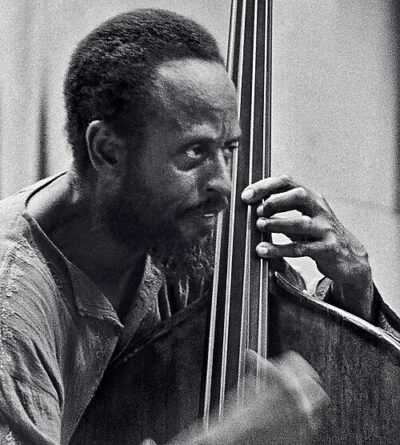
Percy Heath
Percy Heath was an American musician. Born April 30, 1923, in Wilmington. Died April 28, 2005, in Southampton. Awards include NEA Jazz Masters.
Facts
20 facts · 2 confirmed by two sources · 5 cited · 13 from one source
Where this comes from
Papalocal keeps its own record. It started from these sources; what each one said is kept here as it was copied, so a change on their side never changes this page by itself. Tap one to read its version.
What Wikidata says · copied November 16, 2026 · revision 2545656636
- Described as
- American musician (1923–2005)
- Born
- April 30, 1923 · 3 references
- Died
- April 28, 2005 · 2 references
- Born in
- Wilmington · 1 reference
- Died in
- Southampton
- Cause of death
- bone cancer
- Citizen of
- United States
- Occupation
- jazz musician; aircraft pilot; cellist · 1 reference; musician · 1 reference
- Member of
- Tuskegee Airmen
- Genre
- jazz; hard bop · 1 reference
- Instrument
- double bass; cello · 1 reference; bass instrument · 1 reference
- Awards
- NEA Jazz Masters
- Siblings
- Jimmy Heath; Albert Heath
- Website
- https://www.nea.gov/national/jazz/masterbios/percyheath.html · 1 reference
- Wikipedias with a page
- 23
Wikidata item Q981283 (wikidata.org/wiki/Q981283), public domain (CC0). Copied November 16, 2026.
What Wikipedia says · copied November 16, 2026 · revision 1373872538
Percy Heath (April 30, 1923 – April 28, 2005) was an American jazz bassist, brother of saxophonist Jimmy Heath and drummer Albert Heath, with whom he formed the Heath Brothers in 1975. Heath played with the Modern Jazz Quartet throughout their long history and also worked with Miles Davis, Dizzy Gillespie, Charlie Parker, Wes Montgomery, Thelonious Monk and Lee Konitz.
- Born, in its opening lines
- April 30, 1923
- Died, in its opening lines
- April 28, 2005
From the Wikipedia article “Percy Heath” (en.wikipedia.org/wiki/Percy_Heath), by its contributors, under CC BY-SA 4.0 (creativecommons.org/licenses/by-sa/4.0/). Copied November 16, 2026; not changed.
Confirmed Two sources agree. Cited One source, and it names where it got it. One source One source, without a reference of its own. Sources disagree The sources disagree. We show the best-supported value and keep theirs below.
