
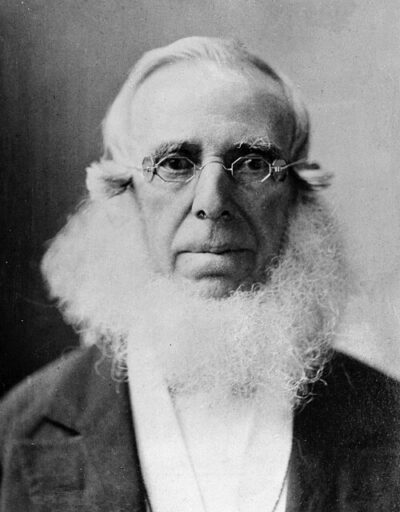
Peter Cooper
Peter Cooper was an American politician and businessman. Born February 12, 1791, in New York City. Died April 4, 1883, in New York City. Awards include National Inventors Hall of Fame.
Facts
17 facts · 2 confirmed by two sources · 9 cited · 6 from one source
Where this comes from
Papalocal keeps its own record. It started from these sources; what each one said is kept here as it was copied, so a change on their side never changes this page by itself. Tap one to read its version.
What Wikidata says · copied November 16, 2026 · revision 2567351318
- Described as
- American politician and businessman (1791-1883)
- Born
- February 12, 1791 · 5 references
- Died
- April 4, 1883 · 5 references
- Born in
- New York City · 1 reference
- Died in
- New York City · 1 reference
- Buried in
- Green-Wood Cemetery · 1 reference
- Citizen of
- United States
- Occupation
- entrepreneur · 1 reference; inventor · 1 reference; philanthropist; politician · 1 reference; industrialist · 1 reference; writer · 1 reference
- Political party
- Greenback Party
- Awards
- National Inventors Hall of Fame (2006) · 1 reference
- Spouse
- Sarah Cooper (1813–1869)
- Children
- Edward Cooper; Sarah Amelia Cooper · 1 reference
- Wikipedias with a page
- 23
Wikidata item Q935291 (wikidata.org/wiki/Q935291), public domain (CC0). Copied November 16, 2026.
What Wikipedia says · copied November 16, 2026 · revision 1361899858
Peter Cooper (February 12, 1791 – April 4, 1883) was an American industrialist, inventor, philanthropist, and politician. He designed and built the first American steam locomotive, the Tom Thumb, founded the Cooper Union for the Advancement of Science and Art, served as its first president, and stood for election as the Greenback Party's candidate in the 1876 presidential election.
Cooper began tinkering at a young age while working in various positions in New York City. He purchased a glue factory in 1821 and used that factory's profits to found the Canton Iron Works, where he earned even larger profits by fabricating machinery such as the Tom Thumb. Cooper's success as a businessman and inventor continued over the ensuing decades, and he became the first mill operator to successfully use anthracite coal to puddle iron. He also developed numerous patents for products such as gelatin and participated in the laying of the first transatlantic telegraph cable.
During the Gilded Age, Cooper became an ardent critic of the gold standard and the debt-based monetary system of bank currency, advocating instead for government-issued banknotes. Cooper was nominated for president at the 1876 Greenback National Convention, and the Greenback ticket of Cooper and Samuel Fenton Cary won just under one percent of the popular vote in the 1876 presidential election. His son Edward and his son-in-law Abram Hewitt both served as Mayor of New York City.
- Born, in its opening lines
- February 12, 1791
- Died, in its opening lines
- April 4, 1883
From the Wikipedia article “Peter Cooper” (en.wikipedia.org/wiki/Peter_Cooper), by its contributors, under CC BY-SA 4.0 (creativecommons.org/licenses/by-sa/4.0/). Copied November 16, 2026; not changed.
Confirmed Two sources agree. Cited One source, and it names where it got it. One source One source, without a reference of its own. Sources disagree The sources disagree. We show the best-supported value and keep theirs below.
