
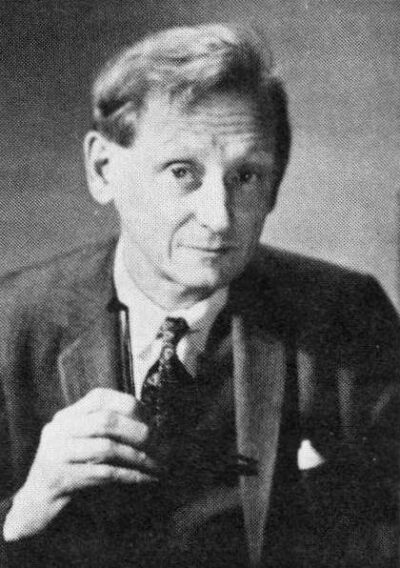
Peter van de Kamp
Peter van de Kamp was a Dutch astronomer. Born December 26, 1901, in Kampen. Died May 18, 1995, in Amsterdam. Educated at Utrecht University and University of Groningen. Awards include Prix Jules Janssen.
Facts
19 facts · 2 confirmed by two sources · 3 cited · 14 from one source
Where this comes from
Papalocal keeps its own record. It started from these sources; what each one said is kept here as it was copied, so a change on their side never changes this page by itself. Tap one to read its version.
What Wikidata says · copied November 16, 2026 · revision 2569651539
- Described as
- Dutch astronomer (1901–1995)
- Other names
- Piet van de Kamp, P. van de Kamp
- Born
- December 26, 1901 · 4 references
- Died
- May 18, 1995 · 4 references
- Born in
- Kampen · 1 reference
- Died in
- Amsterdam · 1 reference
- Citizen of
- Kingdom of the Netherlands; United States
- Occupation
- astronomer · 1 reference; university teacher · 1 reference
- Worked for
- University of Virginia; Swarthmore College · 1 reference
- Education
- Utrecht University; University of Groningen; University of California, Berkeley · 1 reference
- Member of
- Royal Netherlands Academy of Arts and Sciences · 1 reference
- Instrument
- violin; viola; piano
- Awards
- Prix Jules Janssen (1982)
- Field
- astronomy · 1 reference
- Wikipedias with a page
- 23
Wikidata item Q430037 (wikidata.org/wiki/Q430037), public domain (CC0). Copied November 16, 2026.
What Wikipedia says · copied November 16, 2026 · revision 1380173227
Piet van de Kamp (December 26, 1901 – May 18, 1995) was a Dutch astronomer. Known as Peter van de Kamp in the United States, he lived most of his life in that country. He was professor of astronomy at Swarthmore College and director of the college's Sproul Observatory from 1937 until 1972. He specialized in astrometry, studying parallax and proper motions of stars.
His work consisted of assisting with parallax programs and proper motion work on stars. Van de Kamp worked under Samuel Alfred Mitchell and Harold Alden. He and Alexander N. Vyssotsky spent eight years measuring 18,000 proper motions. He did additional, smaller projects individually, including an investigation for general and selective absorption of light within the Milky Way.
Van de Kamp came to public attention in the 1960s when he announced that Barnard's Star had a planetary system based on observed "wobbles" in its motion. The particular finding is now known to be false, but scientific debate remains regarding companions around the red dwarf star. He first propounded the theory to the International Astronomical Union in 1963.
- Born, in its opening lines
- December 26, 1901
- Died, in its opening lines
- May 18, 1995
From the Wikipedia article “Peter van de Kamp” (en.wikipedia.org/wiki/Peter_van_de_Kamp), by its contributors, under CC BY-SA 4.0 (creativecommons.org/licenses/by-sa/4.0/). Copied November 16, 2026; not changed.
Confirmed Two sources agree. Cited One source, and it names where it got it. One source One source, without a reference of its own. Sources disagree The sources disagree. We show the best-supported value and keep theirs below.
