
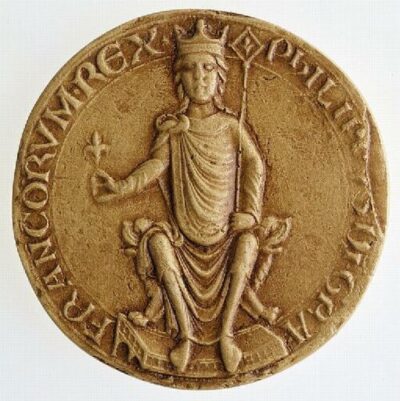
Philip II of France
Philip II of France was a King of France, and the first to be called by that title. Born August 21, 1165, in Paris. Died July 14, 1223, in Mantes-la-Jolie. Positions held include King of France (1180–1223).
Facts
24 facts · 2 confirmed by two sources · 7 cited · 15 from one source
Where this comes from
Papalocal keeps its own record. It started from these sources; what each one said is kept here as it was copied, so a change on their side never changes this page by itself. Tap one to read its version.
What Wikidata says · copied November 16, 2026 · revision 2567484038
- Described as
- King of France, and the first to be called by that title (1165–1223)
- Other names
- Philippe II, Philip Augustus, Philip II
- Born
- August 21, 1165 · 2 references
- Died
- July 14, 1223 · 2 references
- Born in
- Paris
- Died in
- Mantes-la-Jolie · 1 reference
- Buried in
- Basilica of Saint-Denis
- Citizen of
- France
- Occupation
- writer; sovereign
- Positions held
- King of France (1180–1223)
- Spouse
- Isabella of Hainault (1180–1190) · 2 references; Ingeborg of Denmark, Queen of France (1193) · 1 reference; Agnes of Merania (1196–1201) · 2 references
- Children
- Louis VIII of France · 1 reference; Marie of France, Duchess of Brabant · 1 reference; Philip Hurepel; Peter Karlotus
- Father
- Louis VII of France · 1 reference
- Mother
- Adèle of Champagne · 1 reference
- Siblings
- Margaret of France; Agnes of France; Alys, Countess of the Vexin; Alice of France; Marie of France, Countess of Champagne
- Religion
- Christianity
- Wikipedias with a page
- 79
Wikidata item Q34428 (wikidata.org/wiki/Q34428), public domain (CC0). Copied November 16, 2026.
What Wikipedia says · copied November 16, 2026 · revision 1383512681
Philip II (21 August 1165 – 14 July 1223), also known as Philip Augustus (French: Philippe Auguste), was King of France from 1180 to 1223. His predecessors had been known as kings of the Franks (Latin: rex Francorum), but from 1190 onward, Philip became the first French monarch to style himself "King of France" (rex Francie). The only son of King Louis VII and his third wife, Adela of Champagne, he was originally nicknamed 'God-given' (Dieudonné) because he was a first son and born late in his father's life. Philip was given the epithet "Augustus" by the chronicler Rigord for having extended the crown lands of France so remarkably.
After decades of conflicts with the House of Plantagenet, Philip succeeded in putting an end to the Angevin Empire by defeating a coalition of his rivals at the Battle of Bouvines in 1214. This victory had a lasting impact on western European politics: the authority of the French king became unchallenged, while John, King of England, was forced by his barons to assent to Magna Carta and deal with a rebellion against him aided by Philip's son Louis, the First Barons' War. The military actions surrounding the Albigensian Crusade helped prepare the expansion of France southward. Philip did not participate directly in these actions, but he allowed his vassals and knights to help carry them out.
Philip transformed France into the most prosperous and powerful state in Europe. He checked the power of the nobles and helped the towns free themselves from seigneurial authority, granting privileges and liberties to the emergent bourgeoisie. He built a great wall around Paris, "the Wall of Philip II Augustus", re-organised the French government, and brought financial stability to his realm.
- Born, in its opening lines
- August 21, 1165
- Died, in its opening lines
- July 14, 1223
From the Wikipedia article “Philip II of France” (en.wikipedia.org/wiki/Philip_II_of_France), by its contributors, under CC BY-SA 4.0 (creativecommons.org/licenses/by-sa/4.0/). Copied November 16, 2026; not changed.
Confirmed Two sources agree. Cited One source, and it names where it got it. One source One source, without a reference of its own. Sources disagree The sources disagree. We show the best-supported value and keep theirs below.
