
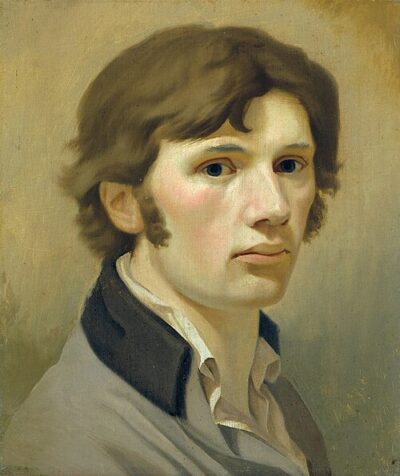
Philipp Otto Runge
Philipp Otto Runge was a German artist. Born July 23, 1777, in Wolgast. Died December 2, 1810, in Hamburg. Known for The Morning, The Hülsenbeck children and Rest on the Flight to Egypt. Educated at Royal Danish Academy of Fine Arts and Gelehrtenschule des Johanneums.
Facts
28 facts · 2 confirmed by two sources · 14 cited · 12 from one source
Where this comes from
Papalocal keeps its own record. It started from these sources; what each one said is kept here as it was copied, so a change on their side never changes this page by itself. Tap one to read its version.
What Wikidata says · copied November 16, 2026 · revision 2569999307
- Described as
- German artist (1777-1810)
- Other names
- Ph. Otto Runge, Otto Philipp Runge, Otto Runge, Runge, Ph. O. Runge, phil. otto runge, Philip Otto Runge
- Born
- July 23, 1777 · 15 references
- Died
- December 2, 1810 · 14 references
- Born in
- Wolgast · 5 references
- Died in
- Hamburg · 5 references
- Buried in
- Ohlsdorf Cemetery
- Cause of death
- tuberculosis
- Citizen of
- Swedish Pomerania
- Occupation
- painter · 2 references; poet · 2 references; printmaker · 1 reference; draftsperson · 1 reference; writer · 1 reference
- Education
- Royal Danish Academy of Fine Arts; Gelehrtenschule des Johanneums
- Genre
- history painting · 1 reference; portrait · 2 references; landscape painting · 2 references; still life · 1 reference
- Known for
- The Morning; The Hülsenbeck children; Rest on the Flight to Egypt
- Spouse
- Pauline Runge (1804–) · 2 references
- Children
- Otto Sigismund Runge
- Father
- Daniel Nikolaus Runge · 1 reference
- Siblings
- Daniel Runge · 1 reference; David Jochim Runge; Carl Hermann Runge · 1 reference; Carl Runge · 1 reference
- Wikipedias with a page
- 42
Wikidata item Q166585 (wikidata.org/wiki/Q166585), public domain (CC0). Copied November 16, 2026.
What Wikipedia says · copied November 16, 2026 · revision 1378315085
Philipp Otto Runge (German: [ˈʁʊŋə]; 1777–1810) was a German artist, draftsman, painter, and color theorist. Runge and Caspar David Friedrich are often regarded as the leading painters of the German Romantic movement. He is frequently compared with William Blake by art historians, although Runge's short ten-year career is not easy to equate to Blake's career. By all accounts he had a brilliant mind and was well versed in the literature and philosophy of his time. He was a prolific letter writer and maintained correspondences and friendships with contemporaries such as Carl Ludwig Heinrich Berger, Caspar David Friedrich, Johann Wolfgang von Goethe, Friedrich Wilhelm Joseph Schelling, Henrik Steffens, and Ludwig Tieck. His paintings are often filled with symbolism and allegories. For eight years he planned and refined his seminal project, Tageszeiten (Times of Day), four monumental paintings 50 square meters each, which in turn were only part of a larger collaborative Gesamtkunstwerk that was to include poetry, music, and architecture, but remained unrealized at the time of his death. With it he aspired to abandon the traditional iconography of Christianity in European art and find a new expression for spiritual values through symbolism in landscapes. One historian stated "In Runge's painting we are clearly dealing with the attempt to present contemporary philosophy in art." He wrote an influential volume on color theory in 1808, Sphere of Colors, that was published the same year he died.
- Born, in its opening lines
- 1777
- Died, in its opening lines
- 1810
From the Wikipedia article “Philipp Otto Runge” (en.wikipedia.org/wiki/Philipp_Otto_Runge), by its contributors, under CC BY-SA 4.0 (creativecommons.org/licenses/by-sa/4.0/). Copied November 16, 2026; not changed.
Confirmed Two sources agree. Cited One source, and it names where it got it. One source One source, without a reference of its own. Sources disagree The sources disagree. We show the best-supported value and keep theirs below.
