
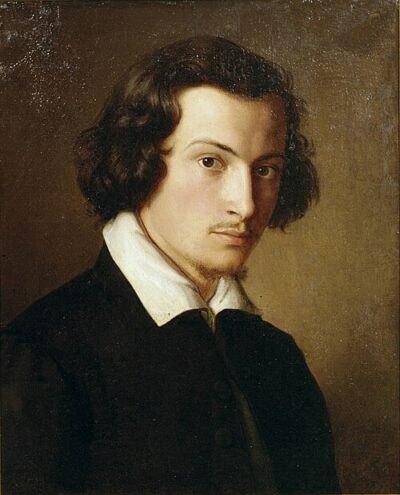
Philipp Veit
Philipp Veit was a German Romantic painter. Born February 13, 1793, in Berlin. Died December 18, 1877, in Mainz. Educated at Dresden Academy of Fine Arts.
Facts
19 facts · 2 confirmed by two sources · 10 cited · 7 from one source
Where this comes from
Papalocal keeps its own record. It started from these sources; what each one said is kept here as it was copied, so a change on their side never changes this page by itself. Tap one to read its version.
What Wikidata says · copied November 18, 2026 · revision 2566150691
- Described as
- German Romantic painter (1793–1877)
- Other names
- Philippe Veit, Philip Veit, Ph. Veit
- Born
- February 13, 1793 · 7 references
- Died
- December 18, 1877 · 7 references
- Born in
- Berlin · 2 references
- Died in
- Mainz · 2 references
- Buried in
- Hauptfriedhof Mainz
- Citizen of
- Kingdom of Prussia
- Occupation
- painter · 1 reference; writer
- Education
- Dresden Academy of Fine Arts
- Genre
- portrait
- Field
- painting · 1 reference
- Children
- Dorothea Settegast; Dorothea Settegast · 1 reference; Friedrich Veit · 1 reference; Theresia von Longard · 1 reference; Maria Benedicta Veit · 1 reference
- Father
- Simon Veit · 1 reference
- Mother
- Dorothea von Schlegel · 1 reference
- Siblings
- Johannes Veit · 1 reference
- Wikipedias with a page
- 23
Wikidata item Q548914 (wikidata.org/wiki/Q548914), public domain (CC0). Copied November 18, 2026.
What Wikipedia says · copied November 18, 2026 · revision 1368359548
Philipp Veit (13 February 1793 – 18 December 1877) was a German Romantic painter and one of the main exponents of the Nazarene movement. It is to Veit that the credit of having been the first to revive the nearly forgotten technique of fresco painting is due.
- Born, in its opening lines
- February 13, 1793
- Died, in its opening lines
- December 18, 1877
From the Wikipedia article “Philipp Veit” (en.wikipedia.org/wiki/Philipp_Veit), by its contributors, under CC BY-SA 4.0 (creativecommons.org/licenses/by-sa/4.0/). Copied November 18, 2026; not changed.
Confirmed Two sources agree. Cited One source, and it names where it got it. One source One source, without a reference of its own. Sources disagree The sources disagree. We show the best-supported value and keep theirs below.
