
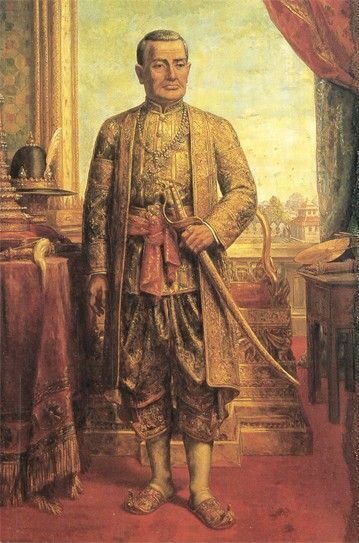
Phutthayotfa Chulalok
Phutthayotfa Chulalok was a King of Siam. Born March 20, 1737, in Phra Nakhon Si Ayutthaya. Died September 7, 1809, in Bangkok. Positions held include King of Thailand (1782–1809).
Facts
22 facts · 2 confirmed by two sources · 1 cited · 19 from one source
Where this comes from
Papalocal keeps its own record. It started from these sources; what each one said is kept here as it was copied, so a change on their side never changes this page by itself. Tap one to read its version.
What Wikidata says · copied November 16, 2026 · revision 2565117883
- Described as
- King of Siam (1737–1809)
- Other names
- Phra Phutthayotfa Chulalok, Thongduang, Chao Phraya Chakri, King Rama I, King Rama I of Thailand, Zheng Hua, Rama I, Buddha Yodfa Chulaloke
- Born
- March 20, 1737 · 1 reference
- Died
- September 7, 1809 · 2 references
- Born in
- Phra Nakhon Si Ayutthaya
- Died in
- Bangkok · 1 reference
- Buried in
- Thailand
- Cause of death
- disease
- Citizen of
- Thailand
- Occupation
- sovereign
- Positions held
- King of Thailand (1782–1809)
- Spouse
- Amarindra · 1 reference
- Children
- Maha Senanurak; Phutthaloetla Naphalai; Kundhon Dibayavadi · 1 reference; Maha Sakdi Balaseb; Chimyai · 1 reference; Paramanuchitchinorot · 1 reference
- Father
- Thongdee, Prince Father of Rattanakosin
- Mother
- Yok, Princess Mother of Rattanakosin
- Siblings
- Maha Sura Singhanat · 1 reference; Sa of Rattanakosin, Princess Dhepsudaowadi · 1 reference; Khun Ramnarong
- Religion
- Buddhism
- Wikipedias with a page
- 54
Wikidata item Q310992 (wikidata.org/wiki/Q310992), public domain (CC0). Copied November 16, 2026.
What Wikipedia says · copied November 16, 2026 · revision 1384898688
Phutthayotfa Chulalok (born Thongduang; 20 March 1737 – 7 September 1809), posthumously honoured as King Phutthayotfa Chulalok the Great, also known by his regnal name Rama I, was the founder of the Rattanakosin Kingdom (now Thailand) and the first King of Siam from the reigning Chakri dynasty. He ascended the throne in 1782, following the deposition of King Taksin of Thonburi. He was also celebrated as the founder of Rattanakosin (now Bangkok) as the new capital of the reunited kingdom.
Rama I, whose given name was Thongduang, was born from a Mon male line descent family, great-grandson of Kosa Pan. His father served in the royal court of the Ayutthaya Kingdom. Thongduang and his younger brother Bunma served King Taksin in wars against the Burmese Konbaung dynasty and helped him in the reunification of Siam. During this time he emerged as Siam's most powerful military leader. Thongduang was the first Somdet Chao Phraya, the highest rank the nobility could attain, equaled to that of royalty. In 1782, he took control of Siam and crowned himself as the monarch. The most famous event in his reign was the Burmese–Siamese War (1785–1786), which was the last major Burmese assault on Siam.
Rama I's reign marked a revival of Siamese culture and state organization following the collapse of the Siamese kingdom in 1767, whose capital was then situated at Ayutthaya. He established a new purified Buddhist sect which allied and tied together Buddhism and the monarchy. Rama I consolidated and expanded on Taksin's military campaigns throughout Mainland Southeast Asia, whose mandala in 1809 stretched north to the Shan States, south to the northern Malay Peninsula and east to the Annamite Range. His reign also marked the beginning of a new "Golden Age of Culture", which continued in the footsteps of the blossoming of the arts during the Late Ayutthaya Period.
- Born, in its opening lines
- March 20, 1737
- Died, in its opening lines
- September 7, 1809
From the Wikipedia article “Rama I” (en.wikipedia.org/wiki/Rama_I), by its contributors, under CC BY-SA 4.0 (creativecommons.org/licenses/by-sa/4.0/). Copied November 16, 2026; not changed.
Confirmed Two sources agree. Cited One source, and it names where it got it. One source One source, without a reference of its own. Sources disagree The sources disagree. We show the best-supported value and keep theirs below.
