
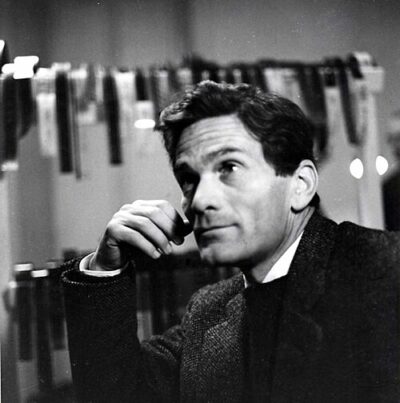
Pier Paolo Pasolini
Pier Paolo Pasolini was an Italian writer, filmmaker, poet, and intellectual. Born March 5, 1922, in Bologna. Died November 2, 1975, in Lido di Ostia. Known for Ragazzi di vita, Teorema and Salò, or the 120 Days of Sodom. Educated at Liceo Luigi Galvani and University of Bologna. Awards include Viareggio Prize, Golden Bear and Best Screenplay Award.
Facts
42 facts · 2 confirmed by two sources · 15 cited · 25 from one source
Where this comes from
Papalocal keeps its own record. It started from these sources; what each one said is kept here as it was copied, so a change on their side never changes this page by itself. Tap one to read its version.
What Wikidata says · copied November 16, 2026 · revision 2563923975
- Described as
- Italian writer, filmmaker, poet, and intellectual (1922–1975)
- Born
- March 5, 1922 · 22 references
- Died
- November 2, 1975 · 18 references
- Born in
- Bologna · 3 references
- Died in
- Lido di Ostia
- Buried in
- cemetery of Casarsa della Delizia · 1 reference
- Citizen of
- Kingdom of Italy (–1946); Italy (1946–)
- Occupation
- film director · 4 references; translator; actor; poet · 3 references; screenwriter · 2 references; journalist; novelist; playwright
- Education
- Liceo Luigi Galvani; University of Bologna
- Genre
- art film · 1 reference; Italian neorealism · 1 reference
- Known for
- Ragazzi di vita; Teorema; Salò, or the 120 Days of Sodom; The Hawks and the Sparrows; The Gospel According to St. Matthew
- Awards
- Viareggio Prize (1957); Golden Bear (1972) · 1 reference; Best Screenplay Award (1958) · 1 reference; Cannes Film Festival Grand Prix · 1 reference; Nastro d'Argento for the director of the best film · 1 reference; Nastro d'Argento for Best Subject; Jussi Awards (1968); Kinema Junpo; Sant Jordi Prize; Grand Jury Prize of the Venice Film Festival (1964) · 1 reference; Silver Bear (1971) · 1 reference; Crotone Prize (1959)
- Field
- film direction · 1 reference; literary activity · 1 reference; belletristic literature · 1 reference; poetry · 1 reference; acting · 1 reference; journalism · 1 reference
- Wikipedias with a page
- 96
Wikidata item Q25120 (wikidata.org/wiki/Q25120), public domain (CC0). Copied November 16, 2026.
What Wikipedia says · copied November 16, 2026 · revision 1383499817
Pier Paolo Pasolini (Italian: [ˌpjɛr ˈpaːolo pazoˈliːni]; 5 March 1922 – 2 November 1975) was an Italian poet, revolutionary, writer, film director, actor and playwright. He is considered one of the defining public intellectuals in 20th-century Italian history, influential both as an artist and a political figure. He is known for directing The Gospel According to St. Matthew, Teorema, the films from Trilogy of Life (The Decameron, The Canterbury Tales and Arabian Nights) and Salò, or the 120 Days of Sodom.
A controversial personality due to his straightforward style, Pasolini's legacy remains contentious. Openly homosexual, while also a vocal advocate for heritage language revival, cultural conservatism, and Christian values in his youth, Pasolini became an avowed Marxist shortly after the end of World War II. He began voicing extremely harsh criticism of Italian petite bourgeoisie and what he saw as the Americanization, cultural degeneration, and greed-driven consumerism taking over Italian culture. As a filmmaker, Pasolini often juxtaposed socio-political polemics with an extremely graphic and critical examination of taboo sexual activity. A prominent protagonist of the Roman intellectual scene during the post-war era, Pasolini became an established and major figure in European literature and cinema.
Pasolini's unsolved and extremely brutal abduction, torture, and murder at Ostia in November 1975 prompted an outcry in Italy, where it continues to be a matter of heated debate. Recent leads by Italian cold case investigators suggest a contract killing by the Banda della Magliana, a criminal organisation with close links to the Propaganda Due masonic lodge and far-right terrorism, as the most likely cause.
- Born, in its opening lines
- March 5, 1922
- Died, in its opening lines
- November 2, 1975
From the Wikipedia article “Pier Paolo Pasolini” (en.wikipedia.org/wiki/Pier_Paolo_Pasolini), by its contributors, under CC BY-SA 4.0 (creativecommons.org/licenses/by-sa/4.0/). Copied November 16, 2026; not changed.
Confirmed Two sources agree. Cited One source, and it names where it got it. One source One source, without a reference of its own. Sources disagree The sources disagree. We show the best-supported value and keep theirs below.
