
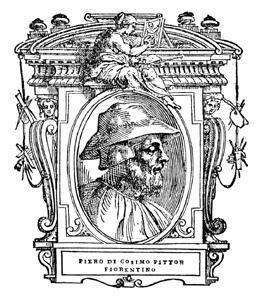
Piero di Cosimo
Piero di Cosimo was an Italian painter. Born January 2, 1462, in Florence. Died April 12, 1522, in Florence. Known for The Death of Procris, Incarnation of Jesus and Madonna and Child with a Dove - Piero di Cosimo - Louvre INV 817.
Facts
14 facts · 2 confirmed by two sources · 4 cited · 8 from one source
What’s different
- Born: we show January 2, 1462 (Confirmed). Wikidata also lists 1460s
Where this comes from
Papalocal keeps its own record. It started from these sources; what each one said is kept here as it was copied, so a change on their side never changes this page by itself. Tap one to read its version.
What Wikidata says · copied November 16, 2026 · revision 2558216526
- Described as
- Italian painter (1462–1522)
- Other names
- Pietro da Cosimo, Piero di Lorenzo, Piero di Lorenzo di Piero d'Antonio, Piero da Cosimo
- Born
- January 2, 1462 · 2 references; 1460s · 1 reference
- Died
- April 12, 1522 · 3 references
- Born in
- Florence · 2 references
- Died in
- Florence · 2 references
- Cause of death
- plague
- Occupation
- painter · 1 reference
- Genre
- portrait
- Known for
- The Death of Procris; Incarnation of Jesus; Madonna and Child with a Dove - Piero di Cosimo - Louvre INV 817; Portrait of Simonetta Vespucci; Venus, Mars and Cupid; Immaculate Conception with Saints · 1 reference
- Field
- Renaissance painting · 1 reference
- Wikipedias with a page
- 45
Wikidata item Q280851 (wikidata.org/wiki/Q280851), public domain (CC0). Copied November 16, 2026.
What Wikipedia says · copied November 16, 2026 · revision 1370413030
Piero di Cosimo (2 January 1462 – 12 April 1522), also known as Piero di Lorenzo, was an Italian Renaissance painter, who continued to use an essentially Early Renaissance style into the 16th century.
He is most famous for the mythological and allegorical subjects he painted in the late Quattrocento; he is said to have abandoned these to return to religious subjects under the influence of Savonarola, the preacher who exercised a huge sway in Florence in the 1490s, and had a similar effect on Botticelli. The High Renaissance style of the new century had little influence on him, and he retained the straightforward realism of his figures, which combines with an often whimsical treatment of his subjects to create the distinctive mood of his works.
Vasari has many stories of his eccentricity, and the mythological subjects have an individual and quirky fascination. He trained under Cosimo Rosselli, whose daughter he married, and assisted him in his Sistine Chapel frescos.
He was also influenced by Early Netherlandish painting, and busy landscapes feature in many works, often forests seen close at hand. Several of his most striking secular works are in the long "landscape" format used for paintings inset into cassone wedding chests or spalliera headboards or panelling. He was apparently famous for designing the temporary decorations for Carnival and other festivities.
- Born, in its opening lines
- January 2, 1462
- Died, in its opening lines
- April 12, 1522
From the Wikipedia article “Piero di Cosimo” (en.wikipedia.org/wiki/Piero_di_Cosimo), by its contributors, under CC BY-SA 4.0 (creativecommons.org/licenses/by-sa/4.0/). Copied November 16, 2026; not changed.
Confirmed Two sources agree. Cited One source, and it names where it got it. One source One source, without a reference of its own. Sources disagree The sources disagree. We show the best-supported value and keep theirs below.
