
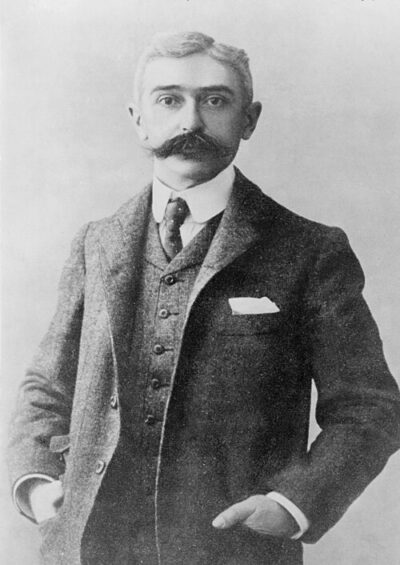
Pierre de Coubertin
Pierre de Coubertin was a founder of modern Olympic Games, pedagogue and historian. Born January 1, 1863, in 7th arrondissement of Paris. Died September 2, 1937, in Geneva. Positions held include president of the International Olympic Committee (1896–1925) and president. Known for modern pentathlon. Educated at École Libre des Sciences Politiques. Awards include Knight Officer of the Order of the Polar Star, Commander of the Order of St. Olav and Grand Cross of the Order of the Phoenix.
Facts
41 facts · 2 confirmed by two sources · 8 cited · 31 from one source
Where this comes from
Papalocal keeps its own record. It started from these sources; what each one said is kept here as it was copied, so a change on their side never changes this page by itself. Tap one to read its version.
What Wikidata says · copied November 16, 2026 · revision 2570044727
- Described as
- founder of modern Olympic Games, pedagogue and historian (1863-1937)
- Other names
- Baron Pierre de Coubertin
- Born
- January 1, 1863 · 14 references
- Died
- September 2, 1937 · 16 references
- Born in
- 7th arrondissement of Paris · 1 reference
- Died in
- Geneva · 4 references
- Buried in
- Bois-de-Vaux Cemetery
- Name at birth
- Charles Pierre Frédy de Coubertin · 1 reference
- Citizen of
- France
- Occupation
- historian · 2 references; pedagogue · 1 reference; teacher · 1 reference; writer; rugby union match official; politician; sports official; founder · 1 reference
- Positions held
- president of the International Olympic Committee (1896–1925); president
- Education
- École Libre des Sciences Politiques
- Member of
- International Olympic Committee · 1 reference; Glory of sport (1994); World Rugby Hall of Fame (2007); Éclaireurs français
- Sport
- rugby union
- Known for
- modern pentathlon · 1 reference
- Awards
- Knight Officer of the Order of the Polar Star; Commander of the Order of St. Olav; Grand Cross of the Order of the Phoenix; Commander First Class of the Order of the White Rose of Finland · 1 reference; Officer of the Order of Orange-Nassau; 2nd Class Order of the Crown with the Star; Knight of the Order of the Crown; Order of the Star of Romania; Grand Cross of the Order of Franz Joseph; Officer of the Order of Leopold II; Glory of sport; World Rugby Hall of Fame (2007); Order of the White Lion 5th Class
- Spouse
- Marie Rothan
- Father
- Charles Louis de Frédy, Baron de Coubertin
- Mother
- Marie Marcelle Gigault de Crisenoy
- Siblings
- Paul Frédy de Coubertin · 1 reference
- Wikipedias with a page
- 116
Wikidata item Q82984 (wikidata.org/wiki/Q82984), public domain (CC0). Copied November 16, 2026.
What Wikipedia says · copied November 16, 2026 · revision 1373187767
Charles Pierre de Frédy, Baron de Coubertin (French: [ʃaʁl pjɛʁ də fʁedi baʁɔ̃ də kubɛʁtɛ̃]; born Pierre de Frédy; 1 January 1863 – 2 September 1937), also known as Pierre de Coubertin and Baron de Coubertin, was a French educator and historian, co-founder of the International Olympic Committee (IOC), and its second president. He is known as the father of the modern Olympic Games. He was particularly active in promoting the introduction of sport in French schools.
Born into a French aristocratic family, Coubertin became an academic and studied a broad range of topics, most notably education and history. He graduated with a degree in law and public affairs from the Paris Institute of Political Studies (Sciences Po). It was at the Paris Institute of Political Studies that he came up with the idea of reviving the Olympic Games.
The Pierre de Coubertin World Trophy and the Pierre de Coubertin Medal are named in his honour.
- Born, in its opening lines
- January 1, 1863
- Died, in its opening lines
- September 2, 1937
From the Wikipedia article “Pierre de Coubertin” (en.wikipedia.org/wiki/Pierre_de_Coubertin), by its contributors, under CC BY-SA 4.0 (creativecommons.org/licenses/by-sa/4.0/). Copied November 16, 2026; not changed.
Confirmed Two sources agree. Cited One source, and it names where it got it. One source One source, without a reference of its own. Sources disagree The sources disagree. We show the best-supported value and keep theirs below.
