
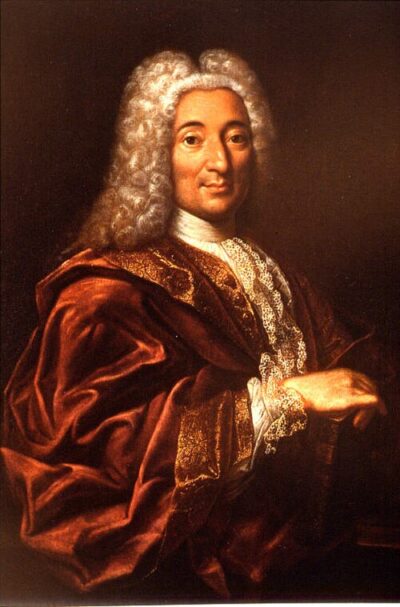
Pierre Fauchard
Pierre Fauchard was a French dentist. Born January 2, 1679, in Saint-Denis-de-Gastines. Died March 21, 1761, in Paris.
Facts
11 facts · 2 confirmed by two sources · 2 cited · 7 from one source
Where this comes from
Papalocal keeps its own record. It started from these sources; what each one said is kept here as it was copied, so a change on their side never changes this page by itself. Tap one to read its version.
What Wikidata says · copied November 18, 2026 · revision 2540645647
- Described as
- French dentist (1679-1761)
- Born
- January 2, 1679 · 2 references
- Died
- March 21, 1761 · 4 references
- Born in
- Saint-Denis-de-Gastines
- Died in
- Paris
- Citizen of
- France · 1 reference
- Occupation
- dentist; physician · 1 reference; surgeon
- Field
- surgery; dentistry
- Children
- Grandmesnil
- Wikipedias with a page
- 24
Wikidata item Q1376711 (wikidata.org/wiki/Q1376711), public domain (CC0). Copied November 18, 2026.
What Wikipedia says · copied November 18, 2026 · revision 1360717895
Pierre Fauchard (French pronunciation: [pjɛʁ foʃaʁ]; 2 January 1679 – 21 March 1761) was a French physician, credited as being the "father of modern dentistry". He is widely known for writing the first complete scientific description of dentistry, Le Chirurgien Dentiste ("The Surgeon Dentist"), published in 1728. The book described basic oral anatomy and function, signs and symptoms of oral pathology, operative methods for removing decay and restoring teeth, periodontal disease (pyorrhea), orthodontics, replacement of missing teeth, and tooth transplantation.
- Born, in its opening lines
- January 2, 1679
- Died, in its opening lines
- March 21, 1761
From the Wikipedia article “Pierre Fauchard” (en.wikipedia.org/wiki/Pierre_Fauchard), by its contributors, under CC BY-SA 4.0 (creativecommons.org/licenses/by-sa/4.0/). Copied November 18, 2026; not changed.
Confirmed Two sources agree. Cited One source, and it names where it got it. One source One source, without a reference of its own. Sources disagree The sources disagree. We show the best-supported value and keep theirs below.
