
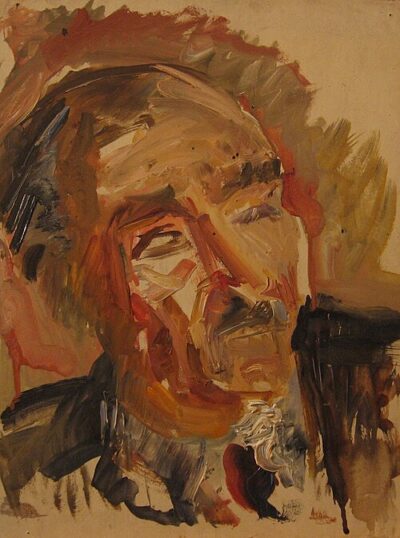
Pierre Jean Jouve
Pierre Jean Jouve was a French novelist and poet. Born October 11, 1887, in Arras. Died January 8, 1976, in Paris. Awards include Knight of the Legion of Honour, Officer of the Legion of Honour and Commander of the Legion of Honour.
Facts
21 facts · 2 confirmed by two sources · 13 cited · 6 from one source
Where this comes from
Papalocal keeps its own record. It started from these sources; what each one said is kept here as it was copied, so a change on their side never changes this page by itself. Tap one to read its version.
What Wikidata says · copied November 18, 2026 · revision 2560173465
- Described as
- French novelist and poet (1887–1976)
- Other names
- Pierre-Jean Jouve, Daniel Rosé, Pierre Charles Jean Jouve
- Born
- October 11, 1887 · 8 references
- Died
- January 8, 1976 · 10 references
- Born in
- Arras · 5 references
- Died in
- Paris · 4 references
- Buried in
- Montparnasse Cemetery
- Name at birth
- Pierre Charles Jean Jouve · 2 references
- Citizen of
- France · 1 reference
- Occupation
- poet · 1 reference; writer · 2 references; essayist; translator · 2 references; novelist; screenwriter; literary critic · 1 reference; editor · 1 reference
- Member of
- Abbaye de Créteil · 1 reference
- Awards
- Knight of the Legion of Honour (1951) · 1 reference; Officer of the Legion of Honour (1958) · 1 reference; Commander of the Legion of Honour (1965) · 1 reference; Grand prix national des Lettres (1962)
- Spouse
- Blanche Reverchon (1925–)
- Wikipedias with a page
- 23
Wikidata item Q379943 (wikidata.org/wiki/Q379943), public domain (CC0). Copied November 18, 2026.
What Wikipedia says · copied November 18, 2026 · revision 1371871965
Pierre Jean Jouve (French pronunciation: [pjɛʁ ʒɑ̃ ʒuv]; 11 October 1887 – 8 January 1976) was a French writer, novelist and poet. He was nominated for the Nobel Prize in Literature five times. In 1966 he was awarded the Grand Prix de Poésie by the French Academy.
Born and raised in Arras, as a teenager Jouve read Rimbaud, Mallarmé, and Baudelaire and began to write poetry of his own. In 1906, he and his sister Madeleine, together with their close family friends the Charpentiers, founded the literary magazine Le Bandeau d'Or. At that time, Jouve drew close to the Abbaye de Créteil, a literary and utopian movement based outside Paris. In 1910 he married Andrée Charpentier, and the couple moved to Poitiers, where Andrée took a position as a teacher and Pierre sold player pianos. During World War One he served as an orderly in the hospital at Poitiers. A militant pacifist, in 1915 he and Andrée left France for Switzerland, where he became close to the novelist Romain Rolland and continued to serve as an orderly.
In the 1920s, Jouve fell in love with Blanche Reverchon, a psychiatrist and the first translator of Sigmund Freud's work into French; later, at Freud's urging, she established her own practice as a psychoanalyst in Paris.. She and Jouve were married in 1925. In 1928, after undergoing analysis himself, Jouve renounced all of his previously published work. His subsequent writing was heavily influenced by his reading of Freud and deeply engaged with themes of sexuality and guilt. In later life, he and Blanche were at the center of a circle of writers and artists that included Balthus, Philippe Roman, David Gascoyne, and Henry Bauchaud. Vociferously anti-fascist, Jouve was along with Louis Aragon one of the chief poets of the French resistance.
- Born, in its opening lines
- October 11, 1887
- Died, in its opening lines
- January 8, 1976
From the Wikipedia article “Pierre Jean Jouve” (en.wikipedia.org/wiki/Pierre_Jean_Jouve), by its contributors, under CC BY-SA 4.0 (creativecommons.org/licenses/by-sa/4.0/). Copied November 18, 2026; not changed.
Confirmed Two sources agree. Cited One source, and it names where it got it. One source One source, without a reference of its own. Sources disagree The sources disagree. We show the best-supported value and keep theirs below.
