
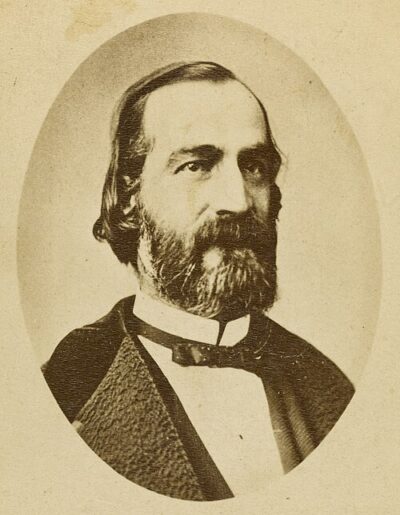
Pierre Tirard
Pierre Tirard was a Prime Minister of France. Born September 27, 1827, in Geneva. Died November 4, 1893, in Paris. Positions held include irremovable senator, member of the National Assembly (1871–1876) and senator of the French Third Republic.
Facts
13 facts · 2 confirmed by two sources · 4 cited · 6 from one source · 1 where the sources disagree
What’s different
- Buried in: we show Père Lachaise Cemetery (Sources disagree). Wikidata also lists Grave of Tirard
Where this comes from
Papalocal keeps its own record. It started from these sources; what each one said is kept here as it was copied, so a change on their side never changes this page by itself. Tap one to read its version.
What Wikidata says · copied November 17, 2026 · revision 2560184990
- Described as
- Prime Minister of France (1827-1893)
- Born
- September 27, 1827 · 4 references
- Died
- November 4, 1893 · 4 references
- Born in
- Geneva
- Died in
- Paris
- Buried in
- Père Lachaise Cemetery; Grave of Tirard
- Citizen of
- France
- Occupation
- politician · 1 reference; engineer
- Positions held
- irremovable senator; member of the National Assembly (1871–1876) · 1 reference; senator of the French Third Republic · 1 reference; President of the Council (1887–1890); Deputy of the French Third Republic (1876–1883) · 1 reference
- Wikipedias with a page
- 26
Wikidata item Q708359 (wikidata.org/wiki/Q708359), public domain (CC0). Copied November 17, 2026.
What Wikipedia says · copied November 17, 2026 · revision 1351215800
Pierre Emmanuel Tirard (French: [pjɛʁ emanɥɛl tiʁaʁ]; 27 September 1827 – 4 November 1893) was a French politician, who served twice as Prime Minister during the Third Republic.
- Born, in its opening lines
- September 27, 1827
- Died, in its opening lines
- November 4, 1893
From the Wikipedia article “Pierre Tirard” (en.wikipedia.org/wiki/Pierre_Tirard), by its contributors, under CC BY-SA 4.0 (creativecommons.org/licenses/by-sa/4.0/). Copied November 17, 2026; not changed.
Confirmed Two sources agree. Cited One source, and it names where it got it. One source One source, without a reference of its own. Sources disagree The sources disagree. We show the best-supported value and keep theirs below.
