
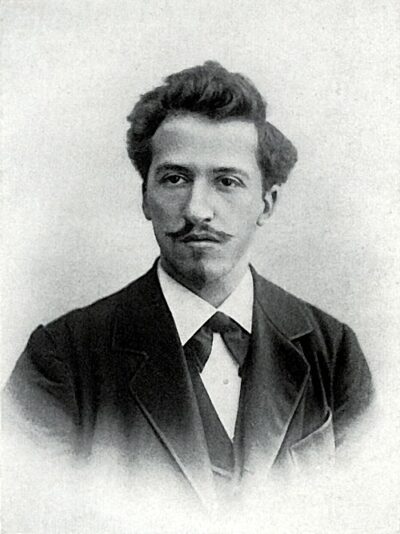
Piet Mondrian
Piet Mondrian was a Dutch painter. Born March 7, 1872, in Amersfoort. Died February 1, 1944, in New York City. Known for Victory Boogie Woogie, Composition in line, second state and Composition XIV. Educated at Rijksakademie van beeldende kunsten.
Facts
33 facts · 2 confirmed by two sources · 20 cited · 11 from one source
Where this comes from
Papalocal keeps its own record. It started from these sources; what each one said is kept here as it was copied, so a change on their side never changes this page by itself. Tap one to read its version.
What Wikidata says · copied November 16, 2026 · revision 2569911544
- Described as
- Dutch painter (1872–1944)
- Other names
- Mondriaan, Piet Cornelis Mondrian, Piet Cornelies Mondrian, Piet Mondriaan, Pieter Cornelis Mondrian, Mondrian, Pieter Cornelis Mondriaan
- Born
- March 7, 1872 · 15 references
- Died
- February 1, 1944 · 15 references
- Born in
- Amersfoort · 4 references
- Died in
- New York City · 5 references
- Buried in
- Cypress Hills Cemetery · 1 reference
- Cause of death
- pneumonia
- Name at birth
- Pieter Cornelis Mondriaan
- Citizen of
- Kingdom of the Netherlands · 2 references
- Occupation
- painter · 5 references; draftsperson · 4 references; architectural drafter · 1 reference; illustrator · 2 references; etcher · 2 references; visual artist · 1 reference; furniture designer · 1 reference; exlibrist · 1 reference
- Education
- Rijksakademie van beeldende kunsten
- Member of
- Arti et Amicitiae (1894–1910) · 2 references; De Stijl; Abstraction-Création · 1 reference; American Abstract Artists · 1 reference
- Genre
- abstract art · 1 reference; allegory · 1 reference; landscape painting · 1 reference; figure · 1 reference; still life · 1 reference; portrait · 1 reference
- Known for
- Victory Boogie Woogie; Composition in line, second state; Composition XIV; Broadway Boogie Woogie
- Field
- painting · 1 reference
- Father
- Pieters Cornelis Mondriaan
- Wikipedias with a page
- 89
Wikidata item Q151803 (wikidata.org/wiki/Q151803), public domain (CC0). Copied November 16, 2026.
What Wikipedia says · copied November 16, 2026 · revision 1385690714
Pieter Cornelis Mondriaan (Dutch: [ˈpitər kɔrˈneːlɪs ˈmɔndrijaːn]; 7 March 1872 – 1 February 1944), known after 1911 as Piet Mondrian (, US also ; Dutch: [pit ˈmɔndrijɑn]), was a Dutch painter and art theoretician, who is regarded as one of the greatest artists of the 20th century. He was one of the pioneers of 20th-century abstract art, as he changed his artistic direction from figurative painting to an increasingly abstract style, until he reached a point where his artistic vocabulary was taken down to simple geometric elements.
Mondrian's art was highly utopian, and was concerned with a search for universal values and aesthetics. He proclaimed in 1914, "Art is higher than reality and has no direct relation to reality. To approach the spiritual in art, one will make as little use as possible of reality, because reality is opposed to the spiritual. We find ourselves in the presence of an abstract art. Art should be above reality, otherwise it would have no value for man."
He was a contributor to the De Stijl art movement and group, which he co-founded with Theo van Doesburg. He evolved a non-representational form which he termed Neoplasticism. This was the new 'pure plastic art' which he believed was necessary in order to create 'universal beauty'. To express this, Mondrian eventually decided to limit his formal vocabulary to the three primary colors (red, blue, and yellow), the three primary values (black, white, and gray), and the two primary directions (horizontal and vertical). Mondrian's arrival in Paris from the Netherlands in 1912 marked the beginning of a period of profound change. He encountered experiments in Cubism, and with the intent of integrating himself within the Parisian avant-garde removed an 'a' from the Dutch spelling of his name (Mondriaan).
- Born, in its opening lines
- March 7, 1872
- Died, in its opening lines
- February 1, 1944
From the Wikipedia article “Piet Mondrian” (en.wikipedia.org/wiki/Piet_Mondrian), by its contributors, under CC BY-SA 4.0 (creativecommons.org/licenses/by-sa/4.0/). Copied November 16, 2026; not changed.
Confirmed Two sources agree. Cited One source, and it names where it got it. One source One source, without a reference of its own. Sources disagree The sources disagree. We show the best-supported value and keep theirs below.
