
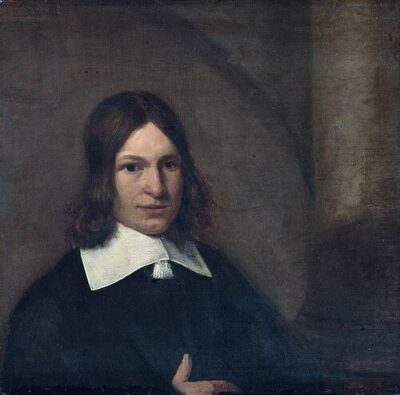
Pieter de Hooch
Pieter de Hooch was a Dutch Golden Age painter. Born December 20, 1629, in Rotterdam. Died March 24, 1684, in Amsterdam. Known for Mother Lacing Her Bodice beside a Cradle, A Woman with a Basket of Beans in a Garden and A Boy Bringing Bread.
Facts
15 facts · 0 confirmed by two sources · 9 cited · 5 from one source · 1 where the sources disagree
What’s different
- Died: we show March 24, 1684 (Sources disagree). Wikidata also lists 1683
Where this comes from
Papalocal keeps its own record. It started from these sources; what each one said is kept here as it was copied, so a change on their side never changes this page by itself. Tap one to read its version.
What Wikidata says · copied November 16, 2026 · revision 2559973951
- Described as
- Dutch Golden Age painter (1629–1684)
- Other names
- Pieter de Hoogh, Pieter de Hooghe, Pieter de Hoge, Peter De Hooge, Piter de Khookh, Pierre de Hooge, Pieter Hendricksz. de Hooghe, Hooghe Pieter Hendricksz. de, Pieter Vander Hoogh, Pierre de Hoogh, Pieter De Hoge, Pieter de Hoogt
- Born
- December 20, 1629 · 1 reference
- Died
- March 24, 1684 · 1 reference; 1683 · 1 reference
- Born in
- Rotterdam · 3 references
- Died in
- Amsterdam · 3 references
- Citizen of
- Dutch Republic · 1 reference
- Occupation
- painter · 3 references; architectural drafter · 1 reference
- Genre
- genre painting · 1 reference; landscape painting · 1 reference; genre art · 1 reference; portrait · 1 reference
- Known for
- Mother Lacing Her Bodice beside a Cradle; A Woman with a Basket of Beans in a Garden; A Boy Bringing Bread
- Field
- painting · 1 reference
- Wikipedias with a page
- 43
Wikidata item Q314889 (wikidata.org/wiki/Q314889), public domain (CC0). Copied November 16, 2026.
What Wikipedia says · copied November 16, 2026 · revision 1385461660
Pieter Hendricksz. de Hooch (Dutch: [ˈpitər ˈɦɛndrɪksoːn də ˈɦoːx]; also spelled Hoogh or Hooghe; bapt. 20 December 1629 – in or after 1679), was a Dutch Golden Age painter famous for his genre works of quiet domestic scenes with an open doorway. He was a contemporary, in the Delft Guild of St. Luke, of Jan Vermeer with whom his work shares themes and style. De Hooch was first recorded in Delft on 5 August 1652, when he and another painter, Hendrick van der Burgh witnessed the signing of a will. He was last documented in 1679, but his date of death is unknown (his son Pieter died in 1684, a date often wrongly given for the father).
From the Wikipedia article “Pieter de Hooch” (en.wikipedia.org/wiki/Pieter_de_Hooch), by its contributors, under CC BY-SA 4.0 (creativecommons.org/licenses/by-sa/4.0/). Copied November 16, 2026; not changed.
Confirmed Two sources agree. Cited One source, and it names where it got it. One source One source, without a reference of its own. Sources disagree The sources disagree. We show the best-supported value and keep theirs below.
