
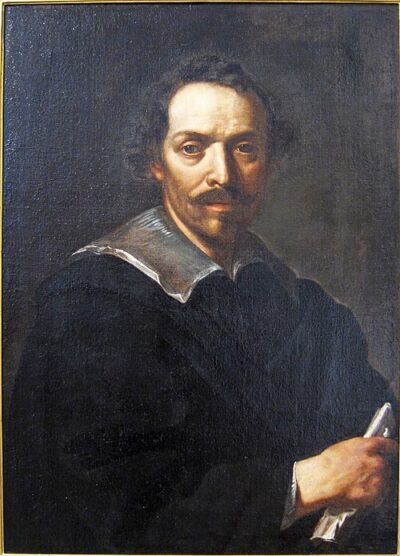
Pietro da Cortona
Pietro da Cortona was an Italian painter and architect of the High Baroque. Born November 1, 1596, in Cortona. Died May 16, 1669, in Rome. Known for Caesar Giving Cleopatra the Throne of Egypt, Romulus and Remus Sheltered by Faustulus and Allegory of Divine Providence and Barberini Power.
Facts
18 facts · 2 confirmed by two sources · 7 cited · 8 from one source · 1 where the sources disagree
What’s different
- Buried in: we show Tomb of Pietro da Cortona (Sources disagree). Wikidata also lists Santi Luca e Martina
Where this comes from
Papalocal keeps its own record. It started from these sources; what each one said is kept here as it was copied, so a change on their side never changes this page by itself. Tap one to read its version.
What Wikidata says · copied November 16, 2026 · revision 2563091515
- Described as
- Italian painter and architect of the High Baroque (1596-1669)
- Other names
- Pietro Berrettini
- Born
- November 1, 1596 · 6 references
- Died
- May 16, 1669 · 11 references
- Born in
- Cortona · 3 references
- Died in
- Rome · 1 reference
- Buried in
- Tomb of Pietro da Cortona · 1 reference; Santi Luca e Martina · 1 reference
- Name at birth
- Pietro Berrettini
- Occupation
- painter · 2 references; architect · 3 references; general contractor · 1 reference; draftsperson · 1 reference; visual artist · 1 reference
- Genre
- architect
- Known for
- Caesar Giving Cleopatra the Throne of Egypt; Romulus and Remus Sheltered by Faustulus; Allegory of Divine Providence and Barberini Power; David killing the Lion · 1 reference
- Field
- painting · 2 references; architecture
- Wikipedias with a page
- 46
Wikidata item Q333323 (wikidata.org/wiki/Q333323), public domain (CC0). Copied November 16, 2026.
What Wikipedia says · copied November 16, 2026 · revision 1383264389
Pietro da Cortona (Italian: [ˈpjɛːtro da (k)korˈtoːna]; 1 November 1596 or 1597 – 16 May 1669) was an Italian Baroque painter and architect. Along with his contemporaries and rivals Gian Lorenzo Bernini and Francesco Borromini, he was one of the key figures in the emergence of Roman Baroque architecture. He was also an important designer of interior decorations.
He was born Pietro Berrettini, but is primarily known by the name of his native town of Cortona in Tuscany. He worked mainly in Rome and Florence. He is best known for his frescoed ceilings, such as the vault of the salone or main salon of the Palazzo Barberini in Rome and carried out extensive painting and decorative schemes for the Medici family in Florence and for the Oratorian fathers at the church of Santa Maria in Vallicella in Rome. He also painted numerous canvases. Only a limited number of his architectural projects were built, but nonetheless they are as distinctive and as inventive as those of his rivals.
- Born, in its opening lines
- November 1, 1596
- Died, in its opening lines
- May 16, 1669
From the Wikipedia article “Pietro da Cortona” (en.wikipedia.org/wiki/Pietro_da_Cortona), by its contributors, under CC BY-SA 4.0 (creativecommons.org/licenses/by-sa/4.0/). Copied November 16, 2026; not changed.
Confirmed Two sources agree. Cited One source, and it names where it got it. One source One source, without a reference of its own. Sources disagree The sources disagree. We show the best-supported value and keep theirs below.
