
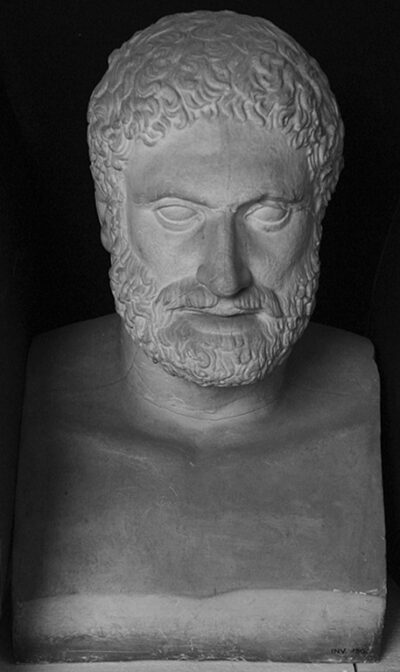
Pisistratus
Pisistratus was the 6th century BC tyrant of ancient Athens. Born 600 BC, in Athens. Died 527 BC, in Athens. Awards include Olympic victor, tethrippon (4-horse chariot).
Facts
14 facts · 0 confirmed by two sources · 5 cited · 8 from one source · 1 where the sources disagree
What’s different
- Born: we show 600 BC (Sources disagree). Wikidata also lists 6th century BC
Where this comes from
Papalocal keeps its own record. It started from these sources; what each one said is kept here as it was copied, so a change on their side never changes this page by itself. Tap one to read its version.
What Wikidata says · copied November 16, 2026 · revision 2558209670
- Described as
- 6th century BC tyrant of ancient Athens
- Other names
- Peisistratos
- Born
- 6th century BC · 1 reference; 600 BC · 2 references
- Died
- 527 BC · 2 references
- Born in
- Athens
- Died in
- Athens · 1 reference
- Citizen of
- Classical Athens
- Occupation
- politician
- Awards
- Olympic victor, tethrippon (4-horse chariot) (-532) · 1 reference
- Spouse
- Hippias' and Hipparchus' mother · 1 reference; Coesyra; Timonassa
- Children
- Hippias · 2 references; Hipparchus · 1 reference; Hegesistratus of Sigeum
- Father
- Hippocrates · 1 reference
- Wikipedias with a page
- 49
Wikidata item Q242172 (wikidata.org/wiki/Q242172), public domain (CC0). Copied November 16, 2026.
What Wikipedia says · copied November 16, 2026 · revision 1381021044
Pisistratus (also spelled Peisistratus or Peisistratos; Greek: Πεισίστρατος Peisistratos; c. 600 BC – 527 BC) was a politician in ancient Athens, ruling as tyrant in the late 560s, the early 550s and from 546 BC until his death. His unification of Attica, the triangular peninsula of Greece containing Athens, along with economic and cultural improvements laid the groundwork for the later pre-eminence of Athens in ancient Greece. His legacy lies in the strengthening of the Athenian economy, the relief of poor farmers, the wider integration of the Eleusinian Mysteries and Dionysia festival into Athenian observance, and the first attempt at producing a definitive version of the Homeric epics. Pisistratus's championing of the lower class of Athens is an early example of populism. While in power, he did not hesitate to confront the aristocracy and greatly reduce their privileges, confiscating their lands and giving them to the poor. Pisistratus funded many religious and artistic programs, in order to improve the economy and spread the wealth more equally among the Athenian people.
Pisistratids is the common family or clan name for the three tyrants, who ruled in Athens from 546 to 510 BC, referring to Pisistratus and his two sons, Hipparchus and Hippias.
From the Wikipedia article “Pisistratus” (en.wikipedia.org/wiki/Pisistratus), by its contributors, under CC BY-SA 4.0 (creativecommons.org/licenses/by-sa/4.0/). Copied November 16, 2026; not changed.
Confirmed Two sources agree. Cited One source, and it names where it got it. One source One source, without a reference of its own. Sources disagree The sources disagree. We show the best-supported value and keep theirs below.
