
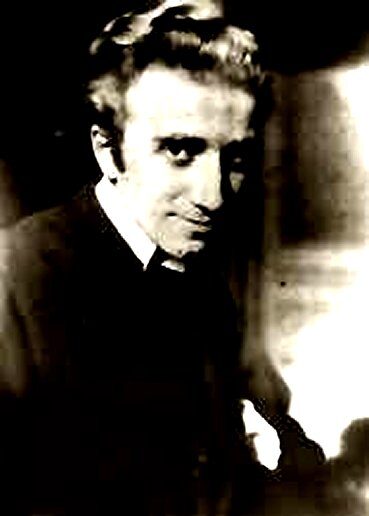
Pitigrilli was an Italian writer. Born May 9, 1893, in Turin. Died May 8, 1975, in Turin. Educated at University of Turin.
Facts
10 facts · 2 confirmed by two sources · 7 cited · 1 from one source
Where this comes from
Papalocal keeps its own record. It started from these sources; what each one said is kept here as it was copied, so a change on their side never changes this page by itself. Tap one to read its version.
What Wikidata says · copied November 17, 2026 · revision 2555589588
- Described as
- Italian writer (1893-1975)
- Other names
- Dino Segre
- Born
- May 9, 1893 · 4 references
- Died
- May 8, 1975 · 4 references
- Born in
- Turin · 2 references
- Died in
- Turin · 1 reference
- Citizen of
- Italy (1946–) · 1 reference; Kingdom of Italy (–1946) · 1 reference
- Occupation
- writer · 1 reference; aphorist · 1 reference; journalist · 1 reference
- Education
- University of Turin
- Wikipedias with a page
- 27
Wikidata item Q970679 (wikidata.org/wiki/Q970679), public domain (CC0). Copied November 17, 2026.
What Wikipedia says · copied November 17, 2026 · revision 1368763103
Pitigrilli was the pseudonym of Dino Segre (9 May 1893 – 8 May 1975), an Italian writer who made his living as a journalist and novelist. His most noted novel was Cocaina (1921), published under his pseudonym and placed on the list of prohibited books by the Catholic Church because of his treatment of drug use (cocaina being cocaine) and sex. It has been translated into several languages and re-issued in several editions. Pitigrilli published novels up until 1974, the year before his death. He spent his later decades of life as a Catholic himself.
Pitigrilli founded the literary magazine Grandi Firme, which was published in Turin from 1924 to 1938, when it was banned under the antisemitic Italian racial laws of the Fascist government. Although baptized a Catholic, Segre was classified as Jewish at that time. His father was Jewish, and Pitigrilli had married a Jewish woman, although they had long lived apart. He had worked in the 1930s as an informant for the Italian fascist secret service OVRA but was dismissed in 1939 after being exposed in Paris.
Pitigrilli had travelled in Europe in the 1930s while maintaining his house in Turin. His efforts, beginning in 1938, to change his racial status were not successful, and he was interned as a Jew in 1940 after Italy's entrance into the war as an ally of Germany. He was released the same year and wrote anonymously in Rome to earn money. After Benito Mussolini's government fell in 1943 and the Germans began to occupy Italy, Pitigrilli fled to Switzerland, where his second wife (a Catholic) and their daughter joined him. They lived there until 1947, then moved to Argentina. Segre and his family returned to Europe in 1958 and settled in Paris, occasionally visiting Turin.
- Born, in its opening lines
- May 9, 1893
- Died, in its opening lines
- May 8, 1975
From the Wikipedia article “Pitigrilli” (en.wikipedia.org/wiki/Pitigrilli), by its contributors, under CC BY-SA 4.0 (creativecommons.org/licenses/by-sa/4.0/). Copied November 17, 2026; not changed.
Confirmed Two sources agree. Cited One source, and it names where it got it. One source One source, without a reference of its own. Sources disagree The sources disagree. We show the best-supported value and keep theirs below.
