
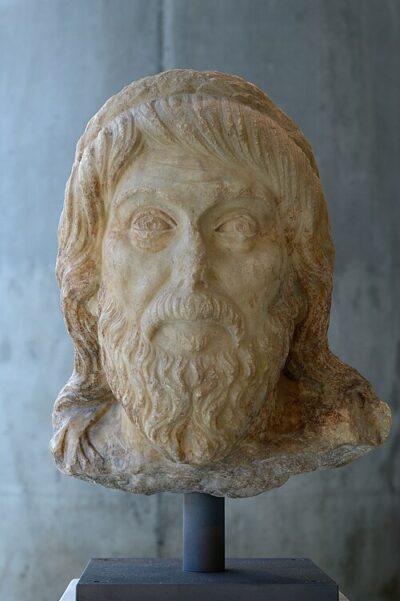
Ploutarchos of Athens
Ploutarchos of Athens was a Greek neoplatonic philosopher (c. 350 – 430 AD). Born 350, in Athens. Died 432, in Athens. Positions held include scholarch of the Platonic Academy (400–432).
Facts
12 facts · 1 confirmed by two sources · 0 cited · 10 from one source · 1 where the sources disagree
What’s different
- Died: we show 432 (Sources disagree). Wikipedia says 430
Where this comes from
Papalocal keeps its own record. It started from these sources; what each one said is kept here as it was copied, so a change on their side never changes this page by itself. Tap one to read its version.
What Wikidata says · copied November 17, 2026 · revision 2550328913
- Described as
- Greek neoplatonic philosopher (c. 350 – 430 AD)
- Other names
- Plutarch of Athens
- Born
- 350
- Died
- 432
- Born in
- Athens
- Died in
- Athens · 1 reference
- Citizen of
- Byzantine Empire
- Occupation
- philosopher
- Positions held
- scholarch of the Platonic Academy (400–432)
- Field
- philosophy; astrology; psychotherapy
- Children
- Asclepigenia · 1 reference; Hierius
- Wikipedias with a page
- 25
Wikidata item Q537304 (wikidata.org/wiki/Q537304), public domain (CC0). Copied November 17, 2026.
What Wikipedia says · copied November 17, 2026 · revision 1372845395
Plutarch of Athens (Greek: Πλούταρχος ὁ Ἀθηναῖος; c. 350 – 430 AD) was a Greek Neoplatonic philosopher who taught in Athens at the beginning of the 5th century. He reestablished the Platonic Academy there and became its leader. He wrote commentaries on Aristotle and Plato, emphasizing the doctrines which they had in common.
- Born, in its opening lines
- 350
- Died, in its opening lines
- 430
From the Wikipedia article “Plutarch of Athens” (en.wikipedia.org/wiki/Plutarch_of_Athens), by its contributors, under CC BY-SA 4.0 (creativecommons.org/licenses/by-sa/4.0/). Copied November 17, 2026; not changed.
Confirmed Two sources agree. Cited One source, and it names where it got it. One source One source, without a reference of its own. Sources disagree The sources disagree. We show the best-supported value and keep theirs below.
