
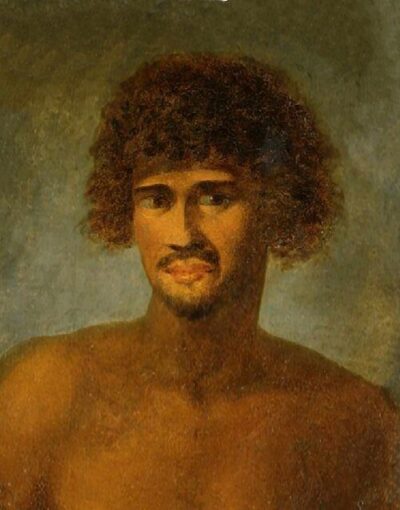
Pōmare I was a King of Tahiti. Born 1743, in Tahiti. Died September 3, 1803, in Arue. Positions held include monarch of Tahiti (1788–1803).
Facts
9 facts · 1 confirmed by two sources · 0 cited · 7 from one source · 1 where the sources disagree
What’s different
- Born: we show 1743 (Sources disagree). Wikidata also lists 1742
Where this comes from
Papalocal keeps its own record. It started from these sources; what each one said is kept here as it was copied, so a change on their side never changes this page by itself. Tap one to read its version.
What Wikidata says · copied November 18, 2026 · revision 2553926430
- Described as
- King of Tahiti
- Born
- 1742; 1743 · 2 references
- Died
- September 3, 1803
- Born in
- Tahiti
- Died in
- Arue
- Cause of death
- thrombosis · 1 reference
- Occupation
- monarch
- Positions held
- monarch of Tahiti (1788–1803)
- Children
- Pōmare II
- Mother
- Tetupaia i Hauiri
- Wikipedias with a page
- 23
Wikidata item Q887971 (wikidata.org/wiki/Q887971), public domain (CC0). Copied November 18, 2026.
What Wikipedia says · copied November 18, 2026 · revision 1386174874
Pōmare I (c. 1753 – September 3, 1803) (fully in old orthography: Tu-nui-ea-i-te-atua-i-Tarahoi Vaira'atoa Taina Pōmare I; also known as Tu or Tinah or Outu, or more formally as Tu-nui-e-a'a-i-te-atua) was the unifier and first king of Tahiti and founder of the Pōmare dynasty and the Kingdom of Tahiti between 1788 and 1791. He abdicated in 1791 but remained in power as the guardian regent during the minority of his successor Pōmare II from 1791 until 1803. He is best known in the western world for being the ruler of Tahiti during the mutiny on the Bounty in 1789.
- Born, in its opening lines
- c. 1753
- Died, in its opening lines
- September 3, 1803
From the Wikipedia article “Pōmare I” (en.wikipedia.org/wiki/Pōmare_I), by its contributors, under CC BY-SA 4.0 (creativecommons.org/licenses/by-sa/4.0/). Copied November 18, 2026; not changed.
Confirmed Two sources agree. Cited One source, and it names where it got it. One source One source, without a reference of its own. Sources disagree The sources disagree. We show the best-supported value and keep theirs below.
