
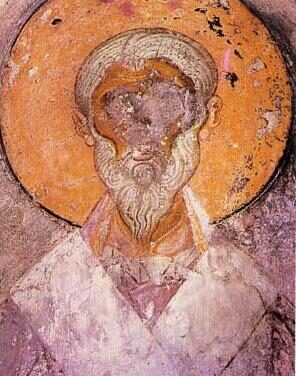
Pope Alexandros of Alexandria was a Patriarch of Alexandria. Born 250, in Alexandria. Died April 17, 326, in Alexandria. Positions held include Patriarch of Alexandria (313–326).
Facts
11 facts · 0 confirmed by two sources · 4 cited · 7 from one source
Where this comes from
Papalocal keeps its own record. It started from these sources; what each one said is kept here as it was copied, so a change on their side never changes this page by itself. Tap one to read its version.
What Wikidata says · copied November 16, 2026 · revision 2569197843
- Described as
- Patriarch of Alexandria
- Other names
- Alexander of Alexandria, St. Alexander
- Born
- 250 · 2 references
- Died
- April 17, 326
- Born in
- Alexandria
- Died in
- Alexandria
- Citizen of
- Ancient Rome
- Occupation
- presbyter; bishop · 1 reference
- Positions held
- Patriarch of Alexandria (313–326)
- Field
- church‘s ministry · 1 reference; apologetics · 1 reference
- Religion
- Christianity
- Wikipedias with a page
- 44
Wikidata item Q44794 (wikidata.org/wiki/Q44794), public domain (CC0). Copied November 16, 2026.
What Wikipedia says · copied November 16, 2026 · revision 1383998689
Alexander I of Alexandria (Koine Greek: Ἀλέξανδρος, Aléxandros) was the 19th Patriarch of Alexandria.
During his patriarchate, he dealt with a number of issues facing the Church in that day. These included the dating of Easter, the actions of Meletius of Lycopolis, and the issue of greatest substance, Arianism. He was the leader of the opposition to Arianism at the First Council of Nicaea. He also mentored his successor, Athanasius of Alexandria, who would become an important Church Father and advocate of the Nicene position against the Arians. He is venerated as a saint in the Catholic and Orthodox Churches.
From the Wikipedia article “Pope Alexander I of Alexandria” (en.wikipedia.org/wiki/Pope_Alexander_I_of_Alexandria), by its contributors, under CC BY-SA 4.0 (creativecommons.org/licenses/by-sa/4.0/). Copied November 16, 2026; not changed.
Confirmed Two sources agree. Cited One source, and it names where it got it. One source One source, without a reference of its own. Sources disagree The sources disagree. We show the best-supported value and keep theirs below.
