
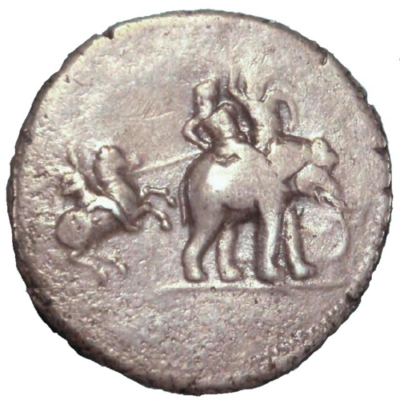
Poros
Poros was an ancient Indian king. Born 4th century BC, in Punjab. Died 316 BC, in Punjab. Positions held include monarch and king.
Facts
8 facts · 0 confirmed by two sources · 0 cited · 6 from one source · 2 where the sources disagree
What’s different
- Born: we show 4th century BC (Sources disagree). Wikipedia says 326
- Died: we show 316 BC (Sources disagree). Wikipedia says 321
Where this comes from
Papalocal keeps its own record. It started from these sources; what each one said is kept here as it was copied, so a change on their side never changes this page by itself. Tap one to read its version.
What Wikidata says · copied November 16, 2026 · revision 2553829767
- Described as
- ancient Indian king
- Other names
- King Porus, Pores, Pure
- Born
- 4th century BC
- Died
- 316 BC
- Born in
- Punjab
- Died in
- Punjab
- Citizen of
- Pauravas
- Occupation
- politician
- Positions held
- monarch; king
- Wikipedias with a page
- 51
Wikidata item Q28935 (wikidata.org/wiki/Q28935), public domain (CC0). Copied November 16, 2026.
What Wikipedia says · copied November 16, 2026 · revision 1380506943
Porus or Poros (Ancient Greek: Πῶρος Pôros; fl. 326–321 BC) was an ancient Indian king whose territory spanned the region between the Hydaspes (Jhelum/Vitasta) and Acesines (Chenab/Asikani) rivers. He is only mentioned in Greek sources. Said to be a warrior with exceptional skills, Porus fought against Alexander the Great in the Battle of the Hydaspes (326 BC). Following the conflict, Porus retained his kingship. Alexander not only reinstated him as his satrap but also expanded his jurisdiction to include dominion over lands to the south-east extending as far as the Hyphasis (Beas River/Vipasha). Porus reportedly died sometime between 321 and 315 BC.
- Born, in its opening lines
- 326
- Died, in its opening lines
- 321
From the Wikipedia article “Porus” (en.wikipedia.org/wiki/Porus), by its contributors, under CC BY-SA 4.0 (creativecommons.org/licenses/by-sa/4.0/). Copied November 16, 2026; not changed.
Confirmed Two sources agree. Cited One source, and it names where it got it. One source One source, without a reference of its own. Sources disagree The sources disagree. We show the best-supported value and keep theirs below.
