
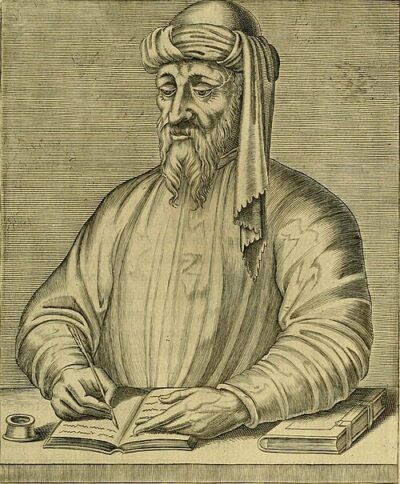
Porphyry
Porphyry was the 3rd-century Phoenician Neoplatonist philosopher. Born 233, in Tyre. Died 301, in Rome. Known for Against the Christians, Life of Pythagoras and History of philosophy.
Facts
18 facts · 0 confirmed by two sources · 8 cited · 10 from one source
Where this comes from
Papalocal keeps its own record. It started from these sources; what each one said is kept here as it was copied, so a change on their side never changes this page by itself. Tap one to read its version.
What Wikidata says · copied November 16, 2026 · revision 2568739929
- Described as
- 3rd-century Phoenician Neoplatonist philosopher
- Other names
- Porphyry of Tyre, Malchus
- Born
- 233 · 2 references
- Died
- 301 · 1 reference
- Born in
- Tyre · 1 reference
- Died in
- Rome · 1 reference
- Name at birth
- Malchus · 1 reference
- Citizen of
- Ancient Rome
- Occupation
- philosopher · 1 reference; music theorist; historian; writer · 1 reference
- Known for
- Against the Christians; Life of Pythagoras; History of philosophy; Chronicle; Life of Plotinus; Geography · 1 reference; Isagoge
- Field
- philosophy
- Wikipedias with a page
- 68
Wikidata item Q203445 (wikidata.org/wiki/Q203445), public domain (CC0). Copied November 16, 2026.
What Wikipedia says · copied November 16, 2026 · revision 1369838362
Porphyry (; Koine Greek: Πορφύριος, romanized: Porphýrios; c. 234 – c. 305) was a Phoenician Neoplatonic philosopher born in Tyre, Roman Phoenicia during Roman rule. He edited and published the Enneads, the only collection of the work of Plotinus, his teacher.
He wrote original works in the Greek language on a wide variety of topics, ranging from music theory to Homer to vegetarianism. His Isagoge or Introduction, an introduction to logic and philosophy, was the standard textbook on logic throughout the Middle Ages in its Latin and Arabic translations. Porphyry was, and still is, also well known for his anti-Christian polemics, and for arguing that the Book of Daniel was pseudepigrapha written during the Maccabean period. Through works such as Philosophy from Oracles and Against the Christians (which was banned by Constantine the Great), he was involved in a controversy with early Christians.
From the Wikipedia article “Porphyry of Tyre” (en.wikipedia.org/wiki/Porphyry_of_Tyre), by its contributors, under CC BY-SA 4.0 (creativecommons.org/licenses/by-sa/4.0/). Copied November 16, 2026; not changed.
Confirmed Two sources agree. Cited One source, and it names where it got it. One source One source, without a reference of its own. Sources disagree The sources disagree. We show the best-supported value and keep theirs below.
