
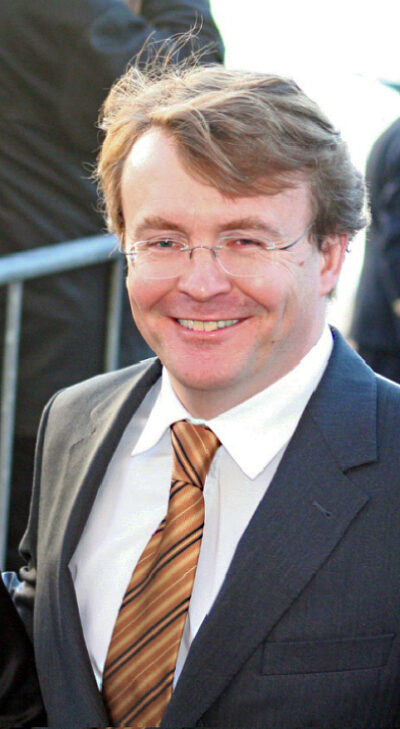
Prince Friso of Orange-Nassau
Prince Friso of Orange-Nassau was a second son of Beatrix of the Netherlands and Claus von Amsberg; brother of King Willem-Alexander of the Netherlands. Born September 25, 1968, in University Medical Center Utrecht. Died August 12, 2013, in The Hague. Educated at Delft University of Technology and University of California, Berkeley. Awards include Order of the Netherlands Lion, Order of the House of Orange and Huwelijksmedaille 2002.
Facts
27 facts · 2 confirmed by two sources · 4 cited · 21 from one source
Where this comes from
Papalocal keeps its own record. It started from these sources; what each one said is kept here as it was copied, so a change on their side never changes this page by itself. Tap one to read its version.
What Wikidata says · copied November 16, 2026 · revision 2557968054
- Described as
- second son of Beatrix of the Netherlands and Claus von Amsberg; brother of King Willem-Alexander of the Netherlands (1968-2013)
- Other names
- Johan Friso van Oranje-Nassau van Amsberg, H.R.H. Prince Friso van Oranje-Nassau, Prince Friso of the Netherlands, Johan Friso Bernhard Christiaan David
- Born
- September 25, 1968 · 2 references
- Died
- August 12, 2013 · 3 references
- Born in
- University Medical Center Utrecht
- Died in
- The Hague · 1 reference
- Buried in
- Lage Vuursche
- Cause of death
- falling from height
- Name at birth
- Johan Friso Bernhard Christiaan David · 2 references
- Citizen of
- Kingdom of the Netherlands
- Occupation
- engineer
- Worked for
- Goldman Sachs (1998–2003); Netherlands Organisation for Applied Scientific Research; Urenco Group
- Education
- Delft University of Technology (1988–1994); University of California, Berkeley (1986–1988); Erasmus University Rotterdam; INSEAD (–1997)
- Awards
- Order of the Netherlands Lion; Order of the House of Orange; Huwelijksmedaille 2002
- Spouse
- Princess Mabel of Orange-Nassau (2004–) · 1 reference
- Children
- Countess Luana of Orange-Nassau · 1 reference; Countess Zaria of Orange-Nassau · 1 reference
- Father
- Prince Claus of the Netherlands
- Mother
- Beatrix of the Netherlands
- Siblings
- William Alexander of the Netherlands; Prince Constantijn of the Netherlands
- Religion
- Protestant Church in the Netherlands
- Wikipedias with a page
- 39
Wikidata item Q352981 (wikidata.org/wiki/Q352981), public domain (CC0). Copied November 16, 2026.
What Wikipedia says · copied November 16, 2026 · revision 1373215635
Prince Friso of Orange-Nassau (Dutch: Johan Friso Bernhard Christiaan David van Oranje-Nassau van Amsberg; 25 September 1968 – 12 August 2013) was a member of the Dutch royal house and the second son of Queen Beatrix of the Netherlands and Claus von Amsberg, and younger brother of King Willem-Alexander. Friso was a member of the Dutch Royal Family, but because of his marriage without an Act of Consent in 2004, he lost his membership of the Dutch Royal House and was no longer in the line of succession to the throne.
On 17 February 2012, Prince Friso was buried under an avalanche in Lech, Austria, while skiing off piste. He was taken to a hospital in Innsbruck, where he was in a critical but stable condition. According to his doctor, Wolfgang Koller, even though he was trapped for a relatively short time and hopes had originally been higher, subsequent neurological tests showed that after fifty minutes of cardiopulmonary resuscitation in moderate hypothermia, he suffered massive brain damage due to oxygen shortage. His initial coma later progressed to a minimally conscious state, and it was unclear whether he would ever regain full consciousness. On 12 August 2013, one and a half years after the accident, Prince Friso died from complications.
- Born, in its opening lines
- September 25, 1968
- Died, in its opening lines
- August 12, 2013
From the Wikipedia article “Prince Friso of Orange-Nassau” (en.wikipedia.org/wiki/Prince_Friso_of_Orange-Nassau), by its contributors, under CC BY-SA 4.0 (creativecommons.org/licenses/by-sa/4.0/). Copied November 16, 2026; not changed.
Confirmed Two sources agree. Cited One source, and it names where it got it. One source One source, without a reference of its own. Sources disagree The sources disagree. We show the best-supported value and keep theirs below.
