
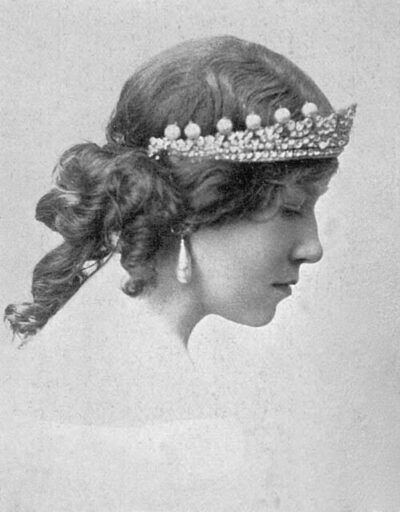
Princess Eugénie of Greece and Denmark
Princess Eugénie of Greece and Denmark was a Greek princess. Born February 10, 1910, in 16th arrondissement of Paris. Died February 13, 1989, in Geneva. Awards include Broquette-Gonin prize.
Facts
18 facts · 2 confirmed by two sources · 4 cited · 12 from one source
Where this comes from
Papalocal keeps its own record. It started from these sources; what each one said is kept here as it was copied, so a change on their side never changes this page by itself. Tap one to read its version.
What Wikidata says · copied November 18, 2026 · revision 2537085827
- Described as
- Greek princess (1910-1989)
- Other names
- Princess Eugenie of Greece and Denmark, Eugénie of Greece and Denmark
- Born
- February 10, 1910 · 2 references
- Died
- February 13, 1989 · 1 reference
- Born in
- 16th arrondissement of Paris · 1 reference
- Died in
- Geneva
- Citizen of
- France
- Occupation
- writer; biographer · 1 reference; aristocrat
- Awards
- Broquette-Gonin prize (1964)
- Spouse
- Prince Dominik Rainer Radziwiłł (1938–1946) · 2 references; Prince Raimundo, 2nd Duke of Castel Duino (1949–1965) · 1 reference
- Children
- Tatiana Radziwiłł · 1 reference; Prince Jerzy Radziwiłł · 1 reference; Prince Carlo Alessandro, 3rd Duke of Castel Duino
- Father
- Prince George of Greece and Denmark
- Mother
- Marie Bonaparte
- Siblings
- Prince Peter of Greece and Denmark
- Religion
- Catholicism
- Wikipedias with a page
- 20
Wikidata item Q2379307 (wikidata.org/wiki/Q2379307), public domain (CC0). Copied November 18, 2026.
What Wikipedia says · copied November 18, 2026 · revision 1386476677
Princess Eugenie of Greece and Denmark (Greek: Ευγενία, romanized: Evyenía; 10 February 1910 – 13 February 1989) was by birth member of the Greek royal family and by marriage member of the House of Radziwiłł and House of Thurn und Taxis.
The daughter of Prince George of Greece and Denmark and Marie Bonaparte, Eugenie was brought up in France in a cosmopolitan family environment that included members of European royal houses and prominent intellectuals. Her godmother was Empress Eugénie of France, the widow of Napoleon III. Eugenie's childhood was marked by a complicated relationship with her parents, her close bond with her elder brother Prince Peter of Greece and Denmark, and a prolonged illness during adolescence. Through her mother, she became acquainted with Sigmund Freud and developed an interest in psychoanalysis.
Eugenie married Prince Dominik Rainer Radziwiłł in 1938 and had two children. During the Second World War, she and her family lived in exile in southern Africa, where she worked as a nurse. After her first marriage ended in divorce, she married Prince Raimundo della Torre e Tasso, Duke of Castel Duino, in 1949. They had a son and divorced in 1965. In later life, Eugenie pursued historical research, publishing a biography of her great-grandfather Pierre-Napoléon Bonaparte in 1963. Her research into the life of Tsarevich Alexei of Russia, based partly on documents she discovered among her family's papers, resulted in a book published posthumously in 1990.
- Born, in its opening lines
- February 10, 1910
- Died, in its opening lines
- February 13, 1989
From the Wikipedia article “Princess Eugénie of Greece and Denmark” (en.wikipedia.org/wiki/Princess_Eugénie_of_Greece_and_Denmark), by its contributors, under CC BY-SA 4.0 (creativecommons.org/licenses/by-sa/4.0/). Copied November 18, 2026; not changed.
Confirmed Two sources agree. Cited One source, and it names where it got it. One source One source, without a reference of its own. Sources disagree The sources disagree. We show the best-supported value and keep theirs below.
