
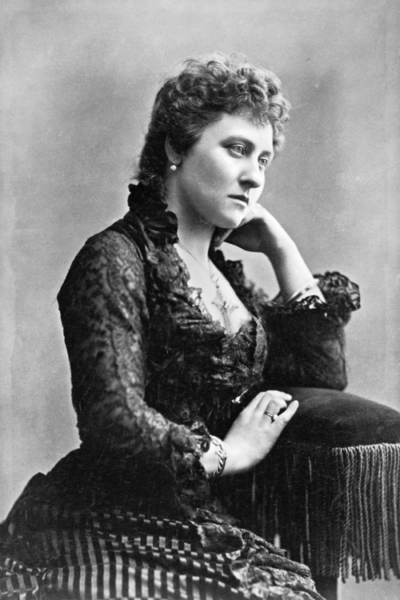
Princess Louise, Duchess of Argyll
Princess Louise, Duchess of Argyll was a Viceregal consort of Canada. Born March 18, 1848, in Buckingham Palace. Died December 3, 1939, in London. Known for Statue of Queen Victoria. Educated at Royal College of Art. Awards include Order of the Crown of India, Dame Grand Cross of the Order of the British Empire and Dame Grand Cross of the Royal Victorian Order.
Facts
35 facts · 2 confirmed by two sources · 12 cited · 20 from one source · 1 where the sources disagree
What’s different
- Died in: we show London (Sources disagree). Wikidata also lists Kensington Palace
Where this comes from
Papalocal keeps its own record. It started from these sources; what each one said is kept here as it was copied, so a change on their side never changes this page by itself. Tap one to read its version.
What Wikidata says · copied November 16, 2026 · revision 2553951042
- Described as
- Viceregal consort of Canada (1848–1939)
- Other names
- The Princess Louisa Caroline Alberta, Marchioness of Lorne, Louise Caroline Alberta, The Princess Louisa Caroline Alberta, Duchess of Argyll, Princess Louisa Caroline Alberta, Marchioness of Lorne, Princess Louise, Louise Argyll, Princess Louisa Caroline Alberta, Duchess of Argyll, The Princess Louise, Duchess of Argyll, Louise Lorne, Louise Campbell, Marchioness of Lorne, The Princess Louise of the United Kingdom, Louise Campbell, Duchess of Argyll
- Born
- March 18, 1848 · 5 references
- Died
- December 3, 1939 · 5 references
- Born in
- Buckingham Palace
- Died in
- Kensington Palace; London · 1 reference
- Buried in
- Royal Burial Ground (1940–); St George's Chapel, Windsor (1939–)
- Name at birth
- The Princess Louisa Caroline Alberta of the United Kingdom
- Citizen of
- United Kingdom · 1 reference; United Kingdom of Great Britain and Ireland
- Occupation
- painter; sculptor; artist · 1 reference; aristocrat
- Education
- Royal College of Art
- Known for
- Statue of Queen Victoria
- Awards
- Order of the Crown of India; Dame Grand Cross of the Order of the British Empire; Dame Grand Cross of the Royal Victorian Order; Dame Grand Cross of the Order of Saint John; Decoration of the Royal Red Cross · 1 reference; Royal Family Order of King Edward VII · 1 reference
- Field
- painting · 1 reference; art of sculpture · 1 reference
- Spouse
- John Campbell, 9th Duke of Argyll (1871–1914) · 2 references
- Father
- Prince Albert of Saxe-Coburg and Gotha · 2 references
- Mother
- Victoria · 2 references
- Siblings
- Victoria, Princess Royal · 1 reference; Edward VII · 1 reference; Princess Alice of the United Kingdom · 1 reference; Alfred, Duke of Saxe-Coburg and Gotha · 1 reference; Princess Helena of the United Kingdom; Prince Arthur, Duke of Connaught and Strathearn · 1 reference; Prince Leopold, Duke of Albany; Princess Beatrice of the United Kingdom
- Nickname
- Little Miss Why
- Wikipedias with a page
- 39
Wikidata item Q161167 (wikidata.org/wiki/Q161167), public domain (CC0). Copied November 16, 2026.
What Wikipedia says · copied November 16, 2026 · revision 1384048212
Princess Louise, Duchess of Argyll (Louisa Caroline Alberta; 18 March 1848 – 3 December 1939), was the sixth child and fourth daughter of Queen Victoria and Prince Albert.
In her public life, she was a strong proponent of the arts and higher education and of the feminist cause. She was an influential supporter of the Edinburgh College of Domestic Science, the forerunner to Queen Margaret University, becoming the institution's first Patron in 1891 until 1939. Her early life was spent moving among the various royal residences in the company of her family. When her father died in December 1861, the court went into a long period of mourning, to which with time Louise became unsympathetic. She was an able sculptor and artist, and several of her sculptures remain today. She was also a supporter of the feminist movement, corresponding with Josephine Butler, and visiting Elizabeth Garrett.
Before her marriage, Louise served as an unofficial secretary to the Queen from 1866 to 1871. The question of Louise's marriage was discussed in the late 1860s. Suitors from the royal houses of Prussia and Denmark were suggested, but Victoria did not want her to marry a foreign prince, and therefore suggested a high-ranking member of the British aristocracy. Despite opposition from members of the royal family, Louise fell in love with John Campbell, Marquess of Lorne, the heir of the Duke of Argyll. Victoria consented to the marriage, which took place on 21 March 1871. After a happy beginning, the couple drifted apart, possibly because of their childlessness and the Queen's constraints on their activities.
In 1878, Lorne was appointed Governor General of Canada, a post he held from 1878 to 1884. Louise was viceregal consort, starting a lasting interest in Canada. Her names were used to name many features in Canada, including the Louise Bridge in Winnipeg, Lake Louise and the province of Alberta. Following her mother's death in 1901, she entered the social circle established by her elder brother, the new king, Edward VII. Louise's marriage with Lorne survived thanks to long periods of separation; they reconciled in 1911, and Louise was devastated by Lorne's death in 1914. After the First World War, she began to retire from public life, undertaking few public duties outside Kensington Palace, where she died at the age of 91.
- Born, in its opening lines
- March 18, 1848
- Died, in its opening lines
- December 3, 1939
From the Wikipedia article “Princess Louise, Duchess of Argyll” (en.wikipedia.org/wiki/Princess_Louise,_Duchess_of_Argyll), by its contributors, under CC BY-SA 4.0 (creativecommons.org/licenses/by-sa/4.0/). Copied November 16, 2026; not changed.
Confirmed Two sources agree. Cited One source, and it names where it got it. One source One source, without a reference of its own. Sources disagree The sources disagree. We show the best-supported value and keep theirs below.
