
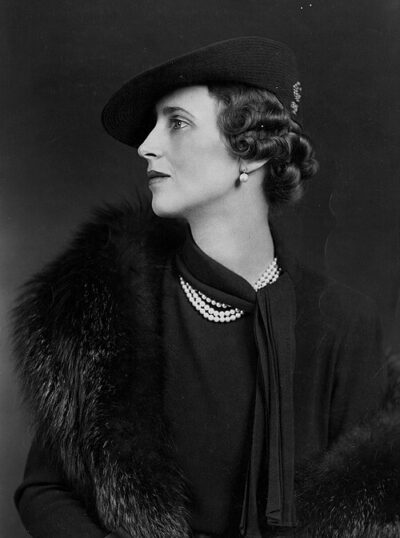
Princess Olga of Greece and Denmark
Princess Olga of Greece and Denmark was an eldest daughter of Prince Nicholas of Greece and Grand Duchess Elena Vladimirovna of Russia. Born June 11, 1903, in Tatoi Palace. Died October 16, 1997, in Paris.
Facts
26 facts · 2 confirmed by two sources · 2 cited · 21 from one source · 1 where the sources disagree
What’s different
- Name at birth: we show Olga of Greece and Denmark (Sources disagree). Wikidata also lists Olga av Grekland och Danmark
Where this comes from
Papalocal keeps its own record. It started from these sources; what each one said is kept here as it was copied, so a change on their side never changes this page by itself. Tap one to read its version.
What Wikidata says · copied November 16, 2026 · revision 2553981937
- Described as
- eldest daughter of Prince Nicholas of Greece and Grand Duchess Elena Vladimirovna of Russia (1903-1997)
- Other names
- Olga of Greece and Denmark, Princess Paul of Yugoslavia
- Born
- June 11, 1903 · 1 reference
- Died
- October 16, 1997 · 1 reference
- Born in
- Tatoi Palace
- Died in
- Paris
- Buried in
- Oplenac
- Cause of death
- Alzheimer's disease
- Name at birth
- Olga of Greece and Denmark; Olga av Grekland och Danmark
- Citizen of
- Kingdom of Greece
- Occupation
- aristocrat
- Member of
- Serbian Royal Family (1923–1929); Greek Royal Family; Yugoslav Royal Family (1929–1992)
- Spouse
- Prince Paul of Yugoslavia (1923–1976) · 1 reference
- Children
- Princess Elizabeth of Serbia · 2 references; Prince Alexander of Serbia; Prince Nikola of Yugoslavia · 2 references
- Father
- Prince Nicholas of Greece and Denmark
- Mother
- Grand Duchess Elena Vladimirovna of Russia
- Siblings
- Princess Marina of Greece and Denmark; Princess Elizabeth of Greece and Denmark
- Religion
- Greek Orthodoxy
- Lived in
- Tatoi Palace; South Africa; Switzerland; Paris; Villa di Pratolino
- Wikipedias with a page
- 34
Wikidata item Q235432 (wikidata.org/wiki/Q235432), public domain (CC0). Copied November 16, 2026.
What Wikipedia says · copied November 16, 2026 · revision 1363092045
Princess Olga of Greece and Denmark (Greek: Όλγα; 11 June 1903 – 16 October 1997) was a Greek and Danish princess who married Prince Paul, Regent of the Kingdom of Yugoslavia. After her marriage, she was known as Princess Paul of Yugoslavia.
Princess Olga was a daughter of Prince Nicholas of Greece and Denmark and Grand Duchess Elena Vladimirovna of Russia, and a granddaughter of King George I of Greece. After a brief engagement in 1922 to Crown Prince Frederik of Denmark, she married Prince Paul of Yugoslavia in 1923. In 1934, after the assassination of King Alexander I, Prince Paul was appointed regent of Yugoslavia on behalf of King Peter II, and Princess Olga became the senior lady of the court and acted as first lady of Yugoslavia, working side by side with her husband on representation duties. In 1941, during the Second World War, Prince Paul was forcibly removed from power after signing the Tripartite Pact, which took Yugoslavia into the Axis with Germany and Italy. Paul, Olga, and their three children were arrested and given as prisoners to the British. They spent the rest of the war in house arrest and exile in Egypt, Kenya and South Africa, and were not allowed to return to Europe until 1948. The couple and their children eventually settled in Paris, France, where Paul died in 1976. Having become a widow, Olga spent more and more time in the United Kingdom, the adopted country of her sister, Marina. Struck by Alzheimer's disease at the end of her life, Olga died in Paris in 1997. Her remains were buried at the Bois-de-Vaux Cemetery, Lausanne, Switzerland, before being transferred to the royal mausoleum of Oplenac, in Serbia, in 2012.
- Born, in its opening lines
- June 11, 1903
- Died, in its opening lines
- October 16, 1997
From the Wikipedia article “Princess Olga of Greece and Denmark” (en.wikipedia.org/wiki/Princess_Olga_of_Greece_and_Denmark), by its contributors, under CC BY-SA 4.0 (creativecommons.org/licenses/by-sa/4.0/). Copied November 16, 2026; not changed.
Confirmed Two sources agree. Cited One source, and it names where it got it. One source One source, without a reference of its own. Sources disagree The sources disagree. We show the best-supported value and keep theirs below.
