
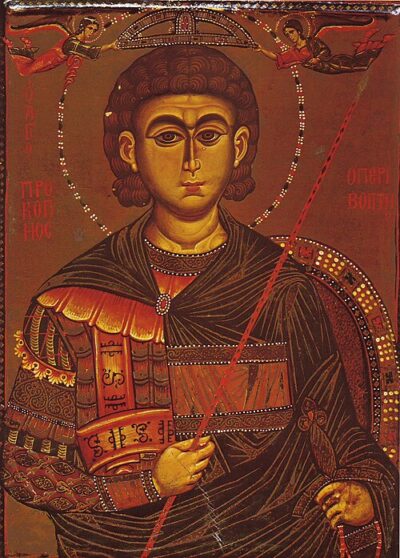
Procopius of Scythopolis was the 3rd-century martyr and saint. Born 3rd century, in Jerusalem. Died July 7, 303, in Caesarea Maritima.
Facts
6 facts · 1 confirmed by two sources · 0 cited · 5 from one source
Where this comes from
Papalocal keeps its own record. It started from these sources; what each one said is kept here as it was copied, so a change on their side never changes this page by itself. Tap one to read its version.
What Wikidata says · copied November 18, 2026 · revision 2545026095
- Described as
- 3rd-century martyr and saint
- Other names
- Procopius Megalomartyr
- Born
- 3rd century
- Died
- July 7, 303 · 1 reference
- Born in
- Jerusalem
- Died in
- Caesarea Maritima
- Cause of death
- decapitation
- Religion
- Christianity
- Wikipedias with a page
- 20
Wikidata item Q2466161 (wikidata.org/wiki/Q2466161), public domain (CC0). Copied November 18, 2026.
What Wikipedia says · copied November 18, 2026 · revision 1378710843
Procopius of Scythopolis (Greek: Προκόπιος ὁ Σκυθοπολίτης; died 7 July 303) was a 4th century martyr who is venerated as a saint. He was a reader and exorcist in the church at Scythopolis; he also was famous as an ascetic and erudite theologian. Eusebius of Caesarea wrote of his martyrdom, which occurred during the persecution of Roman Emperor Diocletian, and stated that "he was born at Jerusalem, but had gone to live in Scythopolis, where he held three ecclesiastical offices. He was reader and interpreter in the Syriac language, and cured those possessed of evil spirits." Eusebius wrote that Procopius was sent with his companions from Scythopolis to Caesarea Maritima, where he was decapitated.
- Died, in its opening lines
- July 7, 303
From the Wikipedia article “Procopius of Scythopolis” (en.wikipedia.org/wiki/Procopius_of_Scythopolis), by its contributors, under CC BY-SA 4.0 (creativecommons.org/licenses/by-sa/4.0/). Copied November 18, 2026; not changed.
Confirmed Two sources agree. Cited One source, and it names where it got it. One source One source, without a reference of its own. Sources disagree The sources disagree. We show the best-supported value and keep theirs below.
