
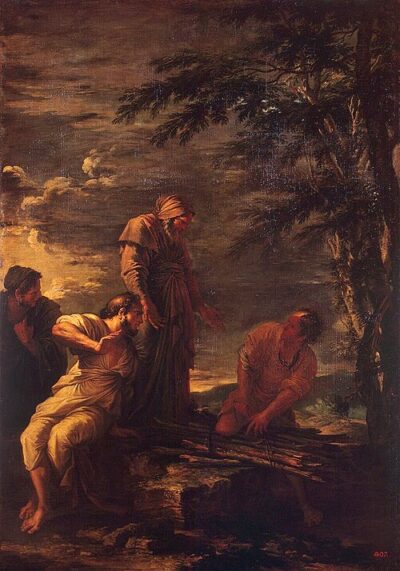
Protagoras
Protagoras was a Pre-Socratic Greek philosopher (c.490–c.420 BC). Born 490 BC, in Ancient Abdera. Died 420 BC, in Ionian Sea.
Facts
8 facts · 0 confirmed by two sources · 4 cited · 4 from one source
Where this comes from
Papalocal keeps its own record. It started from these sources; what each one said is kept here as it was copied, so a change on their side never changes this page by itself. Tap one to read its version.
What Wikidata says · copied November 16, 2026 · revision 2567484198
- Described as
- Pre-Socratic Greek philosopher (c.490–c.420 BC)
- Other names
- Protagoras of Abdera
- Born
- 490 BC · 1 reference
- Died
- 420 BC · 1 reference
- Born in
- Ancient Abdera · 1 reference
- Died in
- Ionian Sea
- Cause of death
- drowning
- Occupation
- philosopher · 1 reference
- Field
- philosophy
- Religion
- agnosticism
- Wikipedias with a page
- 108
Wikidata item Q169243 (wikidata.org/wiki/Q169243), public domain (CC0). Copied November 16, 2026.
What Wikipedia says · copied November 16, 2026 · revision 1382363265
Protagoras ( proh-TAG-ər-əs, -ass; Greek: Πρωταγόρας; c. 490 BC – c. 420 BC) was a pre-Socratic Greek philosopher and rhetorical theorist. He is numbered as one of the sophists by Plato. In his dialogue Protagoras, Plato credits him with inventing the role of the professional sophist.
Protagoras is also believed to have created a major controversy during ancient times through his statement that "Of all things the measure is Man, of the things that are, that they are, and of the things that are not, that they are not" which was usually rendered simply as "Man is the measure of all things", interpreted by Plato to mean that there is no objective truth; Protagoras seems to have meant that each person's own personal history, experiences and expectations, developed over their lifetime, determine their judgments, opinions, and statements regarding "truth" (which is the title of the book in which Protagoras made this statement). When a person makes a judgment about a certain thing—good or bad or beautiful or unjust—that person will differ from other people's judgments because their experience has been different.
This concept of individual relativity was intended to be provocative; naturally, it was criticized by Plato and other philosophers, contrasting with both popular opinion and other philosophical doctrine that reality and its truth must have an objective grounding. However, it was part of Protagoras' point that the statement is somewhat counterintuitive. He argued that this concept—believing that others' opinions about the world are valid and must be respected, even if our own experience of truth is different—is necessary for a community to base itself and its decisions on open, democratic debate.
From the Wikipedia article “Protagoras” (en.wikipedia.org/wiki/Protagoras), by its contributors, under CC BY-SA 4.0 (creativecommons.org/licenses/by-sa/4.0/). Copied November 16, 2026; not changed.
Confirmed Two sources agree. Cited One source, and it names where it got it. One source One source, without a reference of its own. Sources disagree The sources disagree. We show the best-supported value and keep theirs below.
