
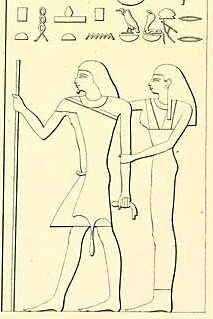
Ptahhotep
Ptahhotep was an Ancient Egyptian vizier. Born 25th century BC. Died 24th century BC. Known for The Maxims of Ptahhotep.
Facts
5 facts · 0 confirmed by two sources · 0 cited · 5 from one source
Where this comes from
Papalocal keeps its own record. It started from these sources; what each one said is kept here as it was copied, so a change on their side never changes this page by itself. Tap one to read its version.
What Wikidata says · copied November 16, 2026 · revision 2549416110
- Described as
- Ancient Egyptian vizier
- Other names
- Ptah-Hotep, Ptah-hotep, Ptah Hotep, Ptahhotpe
- Born
- 25th century BC
- Died
- 24th century BC
- Citizen of
- Ancient Egypt
- Occupation
- philosopher
- Known for
- The Maxims of Ptahhotep
- Wikipedias with a page
- 40
Wikidata item Q573606 (wikidata.org/wiki/Q573606), public domain (CC0). Copied November 16, 2026.
What Wikipedia says · copied November 16, 2026 · revision 1384996483
Ptahhotep (Ancient Egyptian: ptḥ ḥtp "Peace of Ptah"; fl. c. 2400 BC), sometimes referred to as Ptahhotep I or Ptahhotpe, was a vizier during the reign of Djedkare Isesi in Egypt’s Fifth Dynasty. He is best known as the author of The Maxims of Ptahhotep, one of the earliest works of Egyptian wisdom literature, intended to instruct young men in proper conduct and ethical behavior.
Ptahhotep held the highest administrative office under the pharaoh, but his legacy extends beyond politics. He is regarded as one of the earliest recorded philosophers, whose teachings emphasized humility, justice, restraint in speech, and respect for social order (Maat). His writings were addressed initially to his son, Akhethetep, and later copied by scribes for centuries, ensuring their influence on Egyptian thought.
According to Will Durant in The Story of Civilization, Ptahhotep was the first known figure to caution against careless speech in public, anticipating themes later echoed by Greek philosophers such as Socrates and Plato. Durant interprets Ptahhotep’s advice as an early recognition that wisdom may be present among listeners, making prudence in discourse essential.
Ptahhotep was buried in Mastaba D62 at Saqqara. His spouse was Khamerernebty, and his son Akhethetep also held high office. Reliefs from his tomb, including depictions of Ptahhotep wearing different wigs, are preserved in the Imhotep Museum at Saqqara.
From the Wikipedia article “Ptahhotep” (en.wikipedia.org/wiki/Ptahhotep), by its contributors, under CC BY-SA 4.0 (creativecommons.org/licenses/by-sa/4.0/). Copied November 16, 2026; not changed.
Confirmed Two sources agree. Cited One source, and it names where it got it. One source One source, without a reference of its own. Sources disagree The sources disagree. We show the best-supported value and keep theirs below.
