
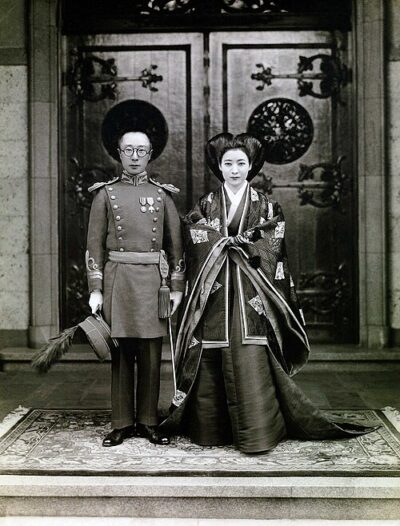
Pujie
Pujie was a Chinese politician and younger brother of Puyi. Born April 16, 1907, in Beijing. Died February 28, 1994, in Beijing. Positions held include member of the National Committee of the Chinese People's Political Consultative Conference and National People's Congress deputy. Educated at Army War College and Imperial Japanese Army Academy. Awards include honorary degree.
Facts
20 facts · 2 confirmed by two sources · 0 cited · 17 from one source · 1 where the sources disagree
What’s different
- Buried in: we show Nakayama Shrine (Sources disagree). Wikidata also lists Mount Miaofeng
Where this comes from
Papalocal keeps its own record. It started from these sources; what each one said is kept here as it was copied, so a change on their side never changes this page by itself. Tap one to read its version.
What Wikidata says · copied November 18, 2026 · revision 2569009041
- Described as
- Chinese politician and younger brother of Puyi (1907-1994)
- Born
- April 16, 1907
- Died
- February 28, 1994
- Born in
- Beijing
- Died in
- Beijing
- Buried in
- Nakayama Shrine · 1 reference; Mount Miaofeng · 1 reference
- Citizen of
- People's Republic of China
- Occupation
- calligrapher; politician
- Positions held
- member of the National Committee of the Chinese People's Political Consultative Conference; National People's Congress deputy
- Education
- Army War College (1943–1944); Imperial Japanese Army Academy (1933–1935)
- Awards
- honorary degree (1991)
- Spouse
- Hiro Saga (1937–); Tang Shi-xia (1924–)
- Children
- Huisheng; Fukunaga Kosei
- Father
- Zaifeng, Prince Chun
- Mother
- Youlan
- Siblings
- Puyi · 1 reference
- Wikipedias with a page
- 23
Wikidata item Q77895 (wikidata.org/wiki/Q77895), public domain (CC0). Copied November 18, 2026.
What Wikipedia says · copied November 18, 2026 · revision 1379834611
Pujie (Chinese: 溥傑; 16 April 1907 – 28 February 1994) was a Qing dynasty imperial prince of the Aisin-Gioro. Pujie was the younger brother of Puyi, the last Emperor of China. After the fall of the Qing dynasty, Pujie went to Japan, where he was educated and married to Hiro Saga, a Japanese noblewoman. In 1937, he moved to Manchukuo, where his brother ruled as Emperor under varying degrees of Japanese control during the Second Sino-Japanese War (1937–1945). After the war ended, Pujie was captured by Red Army, held in Soviet prison camps for five years, and then extradited back to the People's Republic of China, where he was incarcerated for about 10 years in the Fushun War Criminals Management Centre. He was later pardoned and released from prison by the Chinese government, after which he remained in Beijing where he joined the Communist Party and served in a number of positions in the party until his death in 1994.
- Born, in its opening lines
- April 16, 1907
- Died, in its opening lines
- February 28, 1994
From the Wikipedia article “Pujie” (en.wikipedia.org/wiki/Pujie), by its contributors, under CC BY-SA 4.0 (creativecommons.org/licenses/by-sa/4.0/). Copied November 18, 2026; not changed.
Confirmed Two sources agree. Cited One source, and it names where it got it. One source One source, without a reference of its own. Sources disagree The sources disagree. We show the best-supported value and keep theirs below.
