
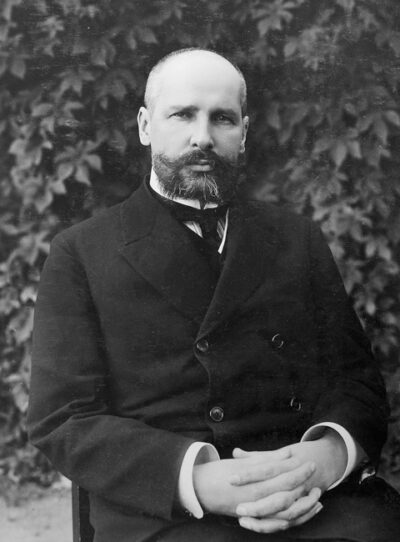
Pyotr Stolypin
Pyotr Stolypin was a Russian politician. Born April 14, 1862, in Dresden. Died September 5, 1911, in Kyiv. Positions held include Prime Minister of Russia (1906–1911), list of Ministers of Interior of Russia (1906–1911) and Governor of Saratov Oblast (1903–1906). Known for Stolypin reform. Educated at Saint Petersburg State University. Awards include Order of the White Eagle, Knight of the Order of St. Alexander Nevsky and Order of Saint Anna, 1st class.
Facts
37 facts · 1 confirmed by two sources · 5 cited · 30 from one source · 1 where the sources disagree
What’s different
- Died: we show September 5, 1911 (Sources disagree). Wikipedia says September 18, 1911
Where this comes from
Papalocal keeps its own record. It started from these sources; what each one said is kept here as it was copied, so a change on their side never changes this page by itself. Tap one to read its version.
What Wikidata says · copied November 16, 2026 · revision 2562794749
- Described as
- Russian politician (1862–1911)
- Other names
- Petr Stolypin, Pyotr Arkadyevich Stolypin
- Born
- April 14, 1862 · 1 reference
- Died
- September 5, 1911 · 1 reference
- Born in
- Dresden · 1 reference
- Died in
- Kyiv · 1 reference
- Buried in
- Kyiv Pechersk Lavra
- Citizen of
- Russian Empire
- Occupation
- politician · 2 references; statesperson; head of government · 1 reference
- Positions held
- Prime Minister of Russia (1906–1911); list of Ministers of Interior of Russia (1906–1911); Governor of Saratov Oblast (1903–1906); governor (1902–1903); Governor of Grodno (1902–1903) · 1 reference; member of the State Council of the Russian Empire
- Education
- Saint Petersburg State University (1881–1885) · 1 reference
- Known for
- Stolypin reform · 2 references
- Awards
- Order of the White Eagle; Knight of the Order of St. Alexander Nevsky; Order of Saint Anna, 1st class; Order of Saint Anna, 2nd class; Order of Saint Anna, 3rd class; Order of St. Vladimir, 3rd class; Royal Victorian Order; Order of St. Olav; Royal Order of the Seraphim; Order of Saints Maurice and Lazarus; Order of the White Eagle; Order of Prince Danilo I; Order of the Rising Sun with Paulownia Flowers, 1st class
- Spouse
- Olga Stolypina · 1 reference
- Children
- Arkadi Stolypine · 1 reference; Aleksandra Stolypina
- Father
- Arkady Stolypin
- Mother
- Natalya Gorchakova
- Siblings
- Aleksandr Stolypin
- Religion
- Eastern Orthodoxy
- Wikipedias with a page
- 68
Wikidata item Q138487 (wikidata.org/wiki/Q138487), public domain (CC0). Copied November 16, 2026.
What Wikipedia says · copied November 16, 2026 · revision 1384133032
Pyotr Arkadyevich Stolypin (Russian: Пётр Арка́дьевич Столы́пин, IPA: [pʲɵtr ɐrˈkadʲjɪvʲɪtɕ stɐˈlɨpʲɪn]; 14 April [O.S. 2 April] 1862 – 18 September [O.S. 5 September] 1911) was a Russian statesman who served as the third prime minister and the interior minister of the Russian Empire from 1906 until his assassination in 1911. Known as a reformer of Russian society and the economy, he initiated reforms which were halted by his assassination.
Born in Dresden, in the Kingdom of Saxony, to a prominent Russian aristocratic family, Stolypin became involved in government from his early 20s. His successes in public service led to rapid promotions, culminating in his appointment as interior minister under prime minister Ivan Goremykin in April 1906. In July, Goremykin resigned and was succeeded as prime minister by Stolypin.
As prime minister, Stolypin initiated major agrarian reforms, known as the Stolypin reform, that granted the right of private land ownership to the peasantry. His tenure was also marked by increased revolutionary unrest, to which he responded with a new system of martial law that allowed for the arrest, speedy trial, and execution of accused offenders. After numerous assassination attempts, Stolypin was fatally shot in September 1911 by revolutionary Dmitrii Bogrov in Kiev.
Stolypin was a monarchist and hoped to strengthen the throne by modernizing the rural Russian economy. Modernity and efficiency, rather than democracy, were his goals. He argued that the land question could be resolved and revolution averted only when the peasant commune was abolished and a stable landowning class of peasants, the kulaks, had a stake in the status quo. His successes and failures have been the subject of controversy among scholars, who agree that he was one of the last major statesmen of Imperial Russia with cogent and forceful public reform policies.
- Born, in its opening lines
- April 14, 1862
- Died, in its opening lines
- September 18, 1911
From the Wikipedia article “Pyotr Stolypin” (en.wikipedia.org/wiki/Pyotr_Stolypin), by its contributors, under CC BY-SA 4.0 (creativecommons.org/licenses/by-sa/4.0/). Copied November 16, 2026; not changed.
Confirmed Two sources agree. Cited One source, and it names where it got it. One source One source, without a reference of its own. Sources disagree The sources disagree. We show the best-supported value and keep theirs below.
