
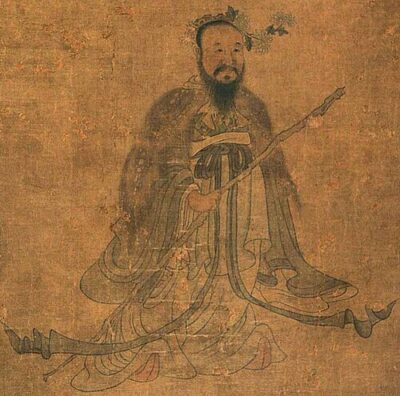
Qu Yuan
Qu Yuan was a Chinese poet and politician (c.340–278 BC). Born 343 BC, in Zigui County. Died 278 BC, in Miluo Jiang. Known for Li Sao.
Facts
11 facts · 0 confirmed by two sources · 3 cited · 8 from one source
Where this comes from
Papalocal keeps its own record. It started from these sources; what each one said is kept here as it was copied, so a change on their side never changes this page by itself. Tap one to read its version.
What Wikidata says · copied November 16, 2026 · revision 2558219236
- Described as
- Chinese poet and politician (c.340–278 BC)
- Other names
- Ch‘ü P‘ing, Ch'ü Yüan
- Born
- 343 BC
- Died
- 278 BC · 1 reference
- Born in
- Zigui County
- Died in
- Miluo Jiang
- Buried in
- Tomb of Qu Yuan
- Cause of death
- drowning
- Citizen of
- Chu
- Occupation
- poet; writer · 2 references; politician · 2 references
- Known for
- Li Sao
- Wikipedias with a page
- 63
Wikidata item Q313330 (wikidata.org/wiki/Q313330), public domain (CC0). Copied November 16, 2026.
What Wikipedia says · copied November 16, 2026 · revision 1385207298
Qu Yuan (c. 340 BC – 278 BC) was a Chinese poet and political figure of the State of Chu during the Warring States period.
The surviving evidence for his life is limited. The earliest known reference to Qu Yuan is Jia Yi's "Diao Qu Yuan Fu" ("Lament for Qu Yuan"), written in 174 BC. The first systematic biography appears in Sima Qian's Records of the Grand Historian, although it contains contradictory details.
Qu Yuan is the central figure associated with the Chu Ci anthology. "The Lament" is generally accepted as his work, while the attribution of many other poems has been disputed. Later tradition associates his death by drowning in the Miluo River with customs of the Dragon Boat Festival.
From the Wikipedia article “Qu Yuan” (en.wikipedia.org/wiki/Qu_Yuan), by its contributors, under CC BY-SA 4.0 (creativecommons.org/licenses/by-sa/4.0/). Copied November 16, 2026; not changed.
Confirmed Two sources agree. Cited One source, and it names where it got it. One source One source, without a reference of its own. Sources disagree The sources disagree. We show the best-supported value and keep theirs below.
