
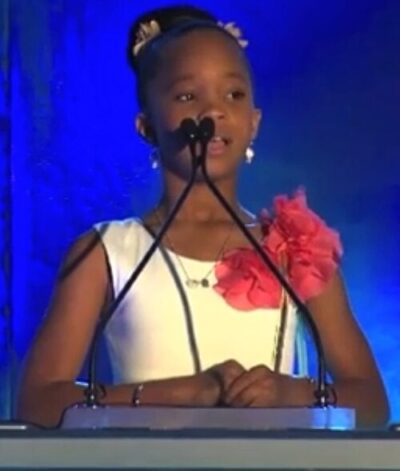
Quvenzhané Wallis is an American actress. Born August 28, 2003, in Houma.
Facts
8 facts · 1 confirmed by two sources · 3 cited · 4 from one source
Where this comes from
Papalocal keeps its own record. It started from these sources; what each one said is kept here as it was copied, so a change on their side never changes this page by itself. Tap one to read its version.
What Wikidata says · copied November 14, 2026 · revision 2567850507
- Described as
- American actress (born 2003)
- Other names
- Quvenzhane Wallis
- Born
- August 28, 2003 · 2 references
- Born in
- Houma
- Citizen of
- United States
- Occupation
- actor · 1 reference; film actor · 1 reference; television actor · 1 reference; voice actor · 1 reference
- Field
- film acting · 1 reference
- Wikipedias with a page
- 40
Wikidata item Q1651742 (wikidata.org/wiki/Q1651742), public domain (CC0). Copied November 14, 2026.
What Wikipedia says · copied November 14, 2026 · revision 1382335317
Quvenzhané Wallis ( kwə-VEN-zhə-nay; born August 28, 2003) is an American actress and author. She made her acting debut in the drama film Beasts of the Southern Wild (2012), which she was nominated for the Academy Award for Best Actress, making her the youngest nominee in the category and the first born in the 21st century. Subsequent credits included Steve McQueen's 12 Years a Slave (2013) and the 2014 remake of the musical Annie, in which her portrayal of the title character was nominated for the Golden Globe Award for Best Actress, as well as a voice role in the animated film Trolls (2016).
Offscreen, Wallis has published four children's books, Shai & Emmie Star in Break an Egg! (2017), A Night Out with Mama (2017), Shai & Emmie Star in Dancy Pants! (2018), and Shai & Emmie Star in To the Rescue! (2018).
- Born, in its opening lines
- August 28, 2003
From the Wikipedia article “Quvenzhané Wallis” (en.wikipedia.org/wiki/Quvenzhané_Wallis), by its contributors, under CC BY-SA 4.0 (creativecommons.org/licenses/by-sa/4.0/). Copied November 14, 2026; not changed.
Confirmed Two sources agree. Cited One source, and it names where it got it. One source One source, without a reference of its own. Sources disagree The sources disagree. We show the best-supported value and keep theirs below.
